We all march on…

img_1876.jpg

I’m just going to slide into this blog post acting as if it’s only been a blip in time since I’ve last posted. It’s okay to start this one out on a lie, yeah? Great, glad we’re in agreement there. Moving swiftly along…

Hi buds! Can you believe it’s 2019 already? I can’t! OK, great. Chit chat – done!

Life sucks. Pardon the melodrama here, but honestly it’s become such a drag lately I genuinely feel like all I ever do is whine and complain and I hate it. I’ve wanted to write about it for so long, but I felt like if I did, I’m just painting myself as this world-class complainer who can never see the good side in life. I don’t want to be that person in the slightest, so instead, I just shut up. But that doesn’t help me emotionally, and it certainly doesn’t help anyone else who cares about me and wants to help. So despite still having reservations about writing this post, here I am. Doing it anyway! *insert awkward grimacing face here*

The last you heard from me, I was talking about my husband’s vitamin deficiency. Plot twist! Turns out, that was never the problem. Also turns out, nobody knows what is the problem. Sound familiar? We’ve done this song and dance so many times, it’s almost weirdly expected now. We’ve been in and out of the hospital the last six months – the emergency department a few times – test after test, waiting for someone to find a lead and bring us closer to an answer to the problem. I’ve been having flashbacks to the time we had to do all this before his CRPS diagnosis, and it is honestly heart-wrenching (and unbearable) remembering it took years of suffering before a doctor diagnosed him. Can I handle that again? Can he? And even now, not all doctors agree that he does, in fact, have CRPS. Every doctor seems to have a differing opinion, but I guess that’s just the nature of a syndrome, eh? In any case, this was never a place I expected us to be back in… ever, let alone this soon after having just rode this crazy train to CRPS land. I want off the damn train.

Every day at work, someone asks me how I’m doing. It’s a natural, casual question, not intended to be loaded in any way. For the last six months, my answer has literally been the same no matter who asks: I’m tired. I keep joking that exhaustion is now just a part of my overall personality, but in my head I do kind of feel like it has overcome me as a person and I’m incapable of being or acting any other way. It’s exhausting being this exhausted! I find myself digging back through my photo archives, reminiscing about years before, wishing I hadn’t taken such a carefree life for granted now that I’ve learned how overwhelming it’d all become. Then the guilt strikes, hard, in waves, and I’m chastising myself for being so negative. My thought patterns are wildly unpredictable, and I can’t even keep up with myself most days. So, I keep it simple when people ask. I’m just tired, and leave it at that.

I’ve mentioned before that I often approach a new year by reflecting on the one that’s just gone, to shed myself of those feelings to begin anew each year. Most of 2018 wasn’t all too bad. Health-wise, my husband wasn’t great the majority of the year, but it had become our new normal and we were just living with it. I felt lonely and isolated a lot, but lacked the motivation to do anything about it. But toward the end of the year, the feelings of pride I had for handling the difficult life the universe crafted for me with grace were quickly replaced with intense fear, uncertainty and crippling anxiety. As his health degraded and new symptoms were emerging, we were absolutely gripped by what was happening. I more or less blacked out from September onward, unable to think of much else apart from his health and what I could or should do to help fix it. Every moment of my time was spent worrying about him, whether he was around me or not. Not only did the new symptoms present more problems going about our ‘normal’ lives, but they seemingly made previous, regular symptoms worse.

But when Christmas finally rolled around, he was starting to feel a little better, and since medical tests hadn’t found anything still, we thought maybe we were in the clear. A fluke, surely. He got back to feeling more positive, laced up his running shoes and stared his pain condition directly in its non-existent face; running each weekend brought him pain, but also joy. The thing that he loved most before the nerve condition turned up uninvited. He was doing it again (!!), slowly and very carefully, but I could see his pure joy and god, how fulfilling that is to witness. Short lived, of course. Isn’t it always?

A few months later, the symptoms were back: extreme dizziness, blurry and/or double vision, intensified pain, localised unintentional muscle contractions, insomnia. A change in diet had improved his gastro symptoms, but nothing else. Blood tests still revealed no abnormalities. I think I took it hardest at first. I felt foolish and naive – how dare I think the issue resolved itself overnight? Haven’t I learned anything in this journey so far? How could I let him down by not being the pragmatic one? I was livid. At myself, at this mystery illness, at the universe. Why couldn’t I help him? It all feels so unfair and I can’t understand why we don’t deserve a break. It’s hard. Every day I’m fighting my own emotions, it’s no wonder I’m this exhausted.

My resolution this year was to be more sociable and make more friends. One thing that makes dealing with my life so difficult lately is that I genuinely do not have friends to help me escape – my mind, the situation, my life (sometimes). Especially in my new country. I don’t mean that to be cruel or dramatic or insensitive to the people who are in my life, but to be completely honest, I do not have anyone who regularly checks in on me without me having to prompt it first. Maybe this is my fault. I can be very closed off and I’ve often backed out of plans with others (because, this life), so I can totally see how I’ve made myself unapproachable in general. Nevertheless, it is hard seeing my husband’s phone light up with messages from friends and colleagues simply checking in, asking if he wants to grab a drink, shoot the breeze – all because they want to. He’s got friends fairly regularly asking him to do things and he’s the one with the disability, but I’ve often been sat at home alone waiting for him to return (and worrying if he’s okay). Don’t get me wrong, I’m thrilled my husband has people in his life like this. It relieves some of the burden and guilt I feel when I think I’m not being or doing enough for him. But still, I’m jealous. I wish I had people who wanted to take my mind off the things troubling me most! And boy, is it hard to make friends as an adult. In any case, I decided I didn’t like feeling so lonely and pathetic, so that’s why I endeavoured to put myself out there more often – social anxiety be damned!

It’s slow going, I’ll admit. I’m still resentful that I’ve seemingly been unable to pick people to stay in my life of their own volition. I can’t help but feel like there must be something wrong with me for people to forget about me so easily or treat me unkindly. I still struggle to shake this ‘woe is me’ feeling I have so often. But! I’ve started to make new friends. People who have so far been kind enough to reach out on their own accord and invite me to do things, ask me how things are, assure me they’re there to talk or not talk – whatever I want or need at any time. I am apprehensive, at best. I want to trust that opening up to new people will bring in new friendships I crave, but I’m also afraid I’ll lose them just as quickly. My life is so unique to the average 20-something, and I’m hyper aware that none of these people may understand the life of a caregiver. Because that’s what I am, really. But I am still trying and being more social and slowly opening up to new people. It is likely I’ll get hurt. I know this – such is life. But if there’s even a small chance that one of these wonderful new people in my life will stick around, then it makes it all worth it. We need people. And I need people to help remind me that I’m still young and have a whole, exciting life ahead of me. To remind me that I am more than this situation. That my personality isn’t ‘tired’. That I’m someone who needs care and attention too, sometimes. I very often forget this down in the muck that is this medical nightmare. So to those of you reading this who’ve been so kind and understanding toward me – even without knowing my whole story yet – I thank you. You have no idea how huge of an impact you’ve already had on my life, and moreover, I hope you stay.

This isn’t an easy life. I’ve never foolishly believed it would be, but I never could’ve guessed I would experience such trauma in such a short span of time. Word on the street is that I’m strong and resilient, but I almost never feel this way. I’m proud of myself for sticking my neck out when I’ve been in need, though. This is something I’ve never been known to do or particularly good at, but I’m finding life a little easier to handle knowing I’ve got a bit of extra help on the outside. Even if that help simply comes in the form of a smiling face willing to take me away from my own thoughts for a bit. Every little bit helps.

So I end this post with one request: always be kind. And when you’re feeling least like wanting to be kind, be even kinder. You never know who is so desperately relying on your kindness just to get through the day.

Go as long as you can, and then take another step.
Size stigmas

Image

Women obsess over size. Weight, height – what have you – it’s like we’ve been conditioned to demand this unobtainable idea of size perfection the split second we’re born. And while there appears to be this gung-ho feminist/girl power movement cropping up all over the world with cheers of acceptance to those who don’t “meet” society’s idea of “attractive size,” I’m sitting over here thinking.. well, wait a minute. This is all fine and dandy, but what about girls like me? Dove’s “Love Your Body” campaign sounds inspirational and empowering, but it seems hyper-focused on the idea that there is such a thing as too skinny, and if you fall under that category, there’s something wrong with you. Real women have curves, right? Actress Sophia Bush struck up a campaign declaring that “zero is not a size” a few years ago too. And while I sit here, staring at a pile of jeans with tags that read “0,” I’m feeling rather insulted. Women are encouraged to accept their curves and rejoice over them because being rail thin is unhealthy. While in some cases, I can fully stand behind this idea (thinness caused or brought on by eating disorders or self-inflicted harm is obviously not good), those of us healthy women who are naturally petite shouldn’t feel so scrutinized! Why are “plus sized” women getting high fives while petite women are getting concerned looks?

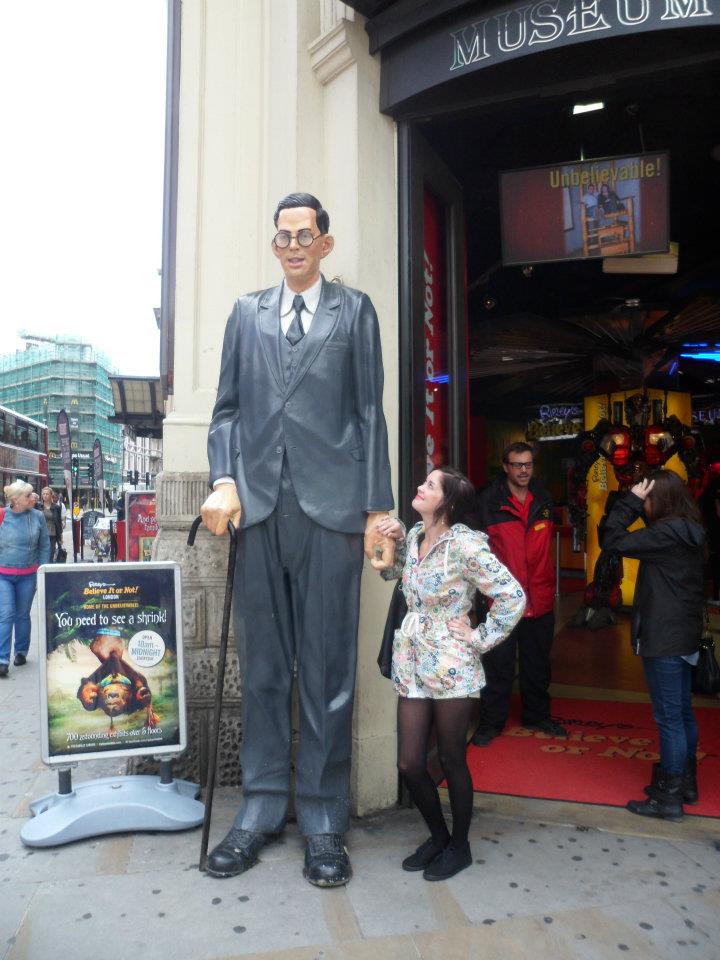
I have always been petite. My family jokes that I was the runt of the litter, but it’s quite honestly accurate. I stand 5’2″ and hover between 90 and 100 pounds. My entire life, I’ve always had people make jokes about my size, pick me up against my will just to see how light I was, analyze my meals, hold things up high so I couldn’t reach them.. childish things that they may have thought were funny, but 20 some years later, the jokes get old. I’d even argue that I am made fun of for my size more often than someone who may be overweight. Why? Because it’s less likely for someone to feel brave enough to pick on an adult because they are overweight than to pick on someone who’s tiny. It can’t be insulting if you’re not calling them fat, right? Wrong. And it’s not only peers who chime in. I avoid seeing doctors as often as possible partly because I know they’ll accuse me of having an eating disorder. I do not have a disorder, but when people point out my perceived deficiencies, I’ll admit that it’s hard not to dwell on them. I recently started a new job that requires lifting and traveling with fairly heavy camera equipment. It never fails that on any given day, someone, whether it be a coworker or stranger who sees me on the street, makes a comment about how it looks like I’m struggling and laughs. Usually, I’m not struggling in the slightest because I’ve learned how to adjust with my small body. I believe, for my size, that I’m strong. But if you compare me to an average woman my age, you’re setting me up to fail. I am not average, and on most days, I’m happy about that. But not always.

Certain things in life are harder to handle when you’re “abnormally” small. For instance, shopping instantly becomes a nightmare. Trying on clothes that overwhelm my small figure is a blow to my ego. There are certain articles of clothing that I’ve simply had to give up on because there’s no way I can ever wear something like that unless I get it custom made. Wearing heels draws attention to my very thin legs. Wearing short sleeves exposes my scarily thin arms. Midriff-bearing tops direct all eyes to my very profound ribcage. My every outfit decision is based around the question, “do I look like an adult?” because I am so often teased for looking much younger than I am and I want it to stop. Bathing suits are a topic I can’t even delve into. I’m paranoid when I go out drinking with friends because I worry that I’ll be accused of underage drinking even with two forms of ID. I avoid eating in front of other people as much as possible because I worry they are judging not only what I’m eating, but how much I wind up eating. This makes going out to eat with friends much more stressful than it should be. I can’t reach a lot of things that most average-sized women can reach. I’ve walked away from many things that I wanted simply because I couldn’t reach it on my own and I was too embarrassed to ask for help. And while many things are merely inconveniences, a fair portion of the problems associated with my size are the mental blows to my psyche thanks to the negative stigma attached to small size.

Recently, I’ve been trying to shop for a wedding dress. While most girls get over-the-moon excited for this process, I was honestly dreading it. Most wedding dress designers don’t make gowns that would comfortably fit my frame. It’s a fair estimate to say that the smallest available size tends to be a size 2. You slip that on my body, and I’ll be swimming in it! And while I understand the fact that every gown is altered to fit the bride, tailoring costs extra the more you need done. And I’d need a lot of work! But I told myself to ignore the fact that every dress I try on will be gigantic and to envision how the final product will look. Now, if you’ve never tried to do this, let me tell you one thing: it’s really freaking hard to do. Especially when the majority of the gown is smushed up and pulled back and completely distorted from its original silhouette. It’s not easy to convince yourself that you look beautiful when you feel like your body is corrupting the whole image.

So my point is this: although I’m all for empowering women, I think we need to focus more on individuality rather than targeting certain groups and trying to lift them up over others. Acceptance, above all else, should be the focus. Plus sized women shouldn’t be cheered on if it means stomping on thin girls in the process. We need to support one another to encourage mentally and physically healthy women. And we also need to learn to accept ourselves. I have good days and I also have days where I could use encouragement. I’ve learned to put the perks of being petite above the pitfalls. And overall, I wouldn’t change who I am or how I am, but it’d be nice to feel like my size doesn’t immediately stigmatize me in society. That would be a movement I can get behind.

Once you accept your “flaws,” no one can use them against you.

Breaking bread

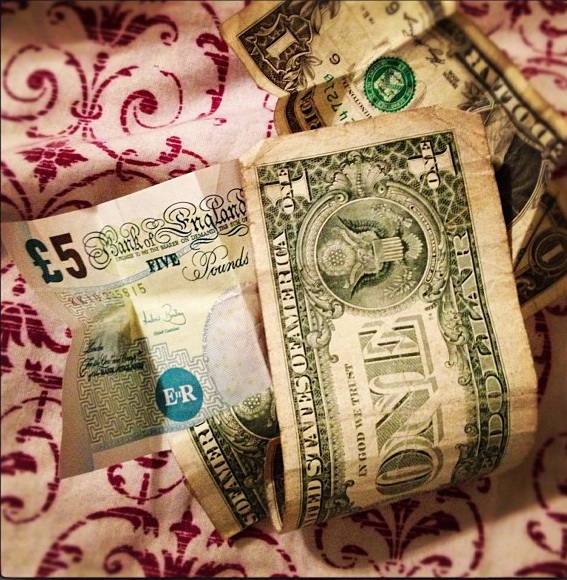
moneyMoney. At this point, I wanted to say “mo’ money, mo’ problems,” but that’s not necessarily true 100 percent of the time, is it? In actuality, there will always be some kind of problem discussing money as a whole, whether it be money in excess or lack thereof. I pity people who have allowed money to make them bitter in one way or another. I’ve met people who are angry with others who have lots of money. They feel these people aren’t using their financial status “properly,” or they did not honestly earn the money they possess. I have met people who are angry with the poor because their lack of money may force them to rely on government aid or they feel they aren’t contributing enough to society. So it seems that no matter how much or how little someone has, someone else is going to resent them for it whether their reasoning is legitimate or not. But what I fail to understand is… why?

I have no money to my name. Well, I certainly have some saved up, but the amount I owe in college loans sort of cancels out what little I do happen to have floating around my bank account. I owe money to the government. I owe money to private companies. I currently do not have an income, thus no way to repay my outstanding loans. In laymen’s terms, I’m a broke college graduate lazing about my parent’s house. Although there are many times when my financial status seriously affects my mood and psyche, I know that my bank account does not and will not ever define me as a person. Yes, life would be easier if I had more to my name for various reasons, but I believe that my value is not tied to how much money I have. I think a lot of people seem to forget this and instantly judge someone’s character, intelligence or work ethic based on their economic standing in society. On the flip side, growing up in a wealthy family who is willing and glad to help financially should not immediately mean that you are “entitled” or “spoiled.” Honestly, I truly dislike the negative connotation that the word, “entitled,” has. The word itself means you have a RIGHT to have, which certainly shouldn’t sound like a bad thing. Helping within the family shouldn’t be looked down on, should it? My brother has a job and sometimes he gives me gas money. Should I be ashamed? Am I entitled? I don’t feel that way. I do not resent others who have more money than I do, nor do I resent them for receiving trust fund money or inheriting a fortune through other ways. I can’t dislike them because I don’t know them personally. Sure, I’ll have my moments of jealousy just like anyone else, and it’s possible that some people with money may not deserve it. But again, who am I to say that for certain?

I understand how individual wealth plays a role in the economy. I can understand why people use so much energy arguing over it. The part I struggle with is why complain if you, yourself, can’t or won’t do anything to make the situation better? There are always exceptions – the poor who is intentionally poor simply to take advantage, the rich who is intentionally lazy and fruitless simply because they can afford to be – but the exception isn’t the only type of person. Wealth has always been something that has divided people even before money as currency was part of the picture. I believe that even if wealth were distributed evenly, people would still find ways to divide.

Nevertheless, I’m all for healthy debate and conversation as long as it does not become personal. If we constantly took offense based on others’ differences or discrepancies, we would live a very lonely life. And I think the golden rule here is if you don’t have anything nice to say, don’t say anything at all. See, preschool taught us something valuable and it doesn’t cost a cent!