All forward motion counts

img_2419

On my last day of CBT, I spent the full session sitting in my chair sobbing uncontrollably, muttering ‘I’m sorry’ in between gasps for air, ‘I don’t know why this is happening’.

A few weeks before Christmas, I self-referred to a local mental health clinic in an attempt to gain control over my thoughts and to learn coping strategies when things felt like they were spiralling out of control. It was something I’d always thought I should do, but never felt I was ‘bad enough’ to require outside guidance. I’m fiercely independent, and I always want to be able to take care of myself without anyone’s help or input. But as my husband’s condition was worsening and the future was quickly filling up with more and more unknowns, I realised now was the time to admit that I needed help. I genuinely felt like I couldn’t face whatever came next for his treatment unless I was properly prepared. So I signed up for a 6-week CBT one-to-one course (cognitive behavioural therapy), intended to analyse the way I reacted to situations, then work to implement changes to disrupt the negative pattern I had fallen into. It sounded like the perfect thing for me to do: it would be work, but it would come with noticeable results.

I kept it quiet from most everyone. I didn’t want anyone to know that I was working on myself because I didn’t want to admit that 1) there was anything that needed fixing and 2) that it was affecting anything more than myself. To be completely honest, I was so stressed and so panicked and so overwhelmed that it was affecting a lot in my life. My anxiety had gotten so extreme that I wasn’t leaving the house except to go to work, and even there I wasn’t myself. I needed help, but I didn’t need to broadcast it to everyone. I wasn’t ready for that.

So I went home to America for the holidays and tried my best to relax during my time off knowing that when I returned, it was time to get to work. And I did. Every week, I went in for my appointment and talked about how I react to situations and how they’re affecting me and how I thought I could change that. I’m not a therapist, but CBT itself is pretty straight forward. It’s goal-oriented and something you can track progress on paper. Each session I’d walk in with my homework in hand ready to discuss it, and each week I was transparently told how well I was doing. I felt pretty proud of myself, and received the positive affirmations I needed each week to keep me working toward a better me. I was slowly breaking the pattern that I knew played a major role in my recent demise. I was clawing my way back up to the surface each week, and for the most part, it felt pretty damn productive.

On my last day of therapy, I had recently gotten incredibly stressful news about my husband. He was due to get DRG surgery in the coming months, but we hadn’t yet been given a date for the surgery (a type of spinal cord stimulation targeting your dorsal root ganglion nerve bodies at the base of the spinal cord). We were just anxiously awaiting a phone call from the hospital that could’ve literally come any day, which meant most of our life plans were on hold or tentative until we knew what was going on with his surgery. A very tense way to live your life, let me tell you. Anyway, we got that call, suddenly, when we weren’t expecting it in the slightest. But it wasn’t the call that threw me – it was that the hospital called to ask if he could come in for surgery three days later. It’s one thing to know you’re waiting for life-changing surgery, but it’s something completely different when you’re asked to get it done in mere days! However, I thought I handled that experience with ease: I was calm, strategic and gave my husband logical advice. When we finally determined it wasn’t the right time to drop everything for the surgery and we’d rather wait for a later date in which we could plan properly, I hung up the phone feeling proud of myself for handling it like a mature adult. Pre-therapy Tanya would’ve completely crumbled from the stress of the situation, over the need to give the hospital an answer within the hour. Panic would’ve taken over and I would’ve been crying in the bathroom desperately trying to compose myself before getting back to work. But not this time! This time I handled it like a pro, and although I still felt a little jittery from the whole ordeal, I survived and I was able to get back to work comfortably. Or so I thought.

When I eventually had my final therapy appointment, I walked in prepped and ready to tell my therapist how I dealt with a scary, overwhelming scenario like a boss. A ‘look how much I’ve learned already’ show of achievement. I walked in smiling, sat down and started explaining how the situation came up and how I responded to it, and the minute my therapist asked what I would’ve done if my husband had taken the early surgery date… I burst into tears. And they didn’t stop. The entire session. I kept apologising and muttering that I didn’t know why this was happening and I was fine the whole time until I walked in that door and how it didn’t make sense and that I was sorry, sorry, sorry. She told me it was a completely normal, emotional reaction and it just showed how much I cared about my husband, and how that type of worry is and will still be normal. She explained the stress of his medical situation is unique and how I need to stop viewing my tears as weakness. I don’t remember every detail of that appointment mostly because I was utterly embarrassed and surprised at my own reaction. I mostly remember her telling me I was strong and proactive, but that maybe I needed something a little more than CBT and gently suggested I pursue treatment elsewhere. I know she meant well, and I know she’s probably right – I need treatment catered specifically to me and my situation because it’s too, uh, complex, for generic therapy plans. But I couldn’t help feeling like I had failed therapy. I was doing so, so well only to completely lose it on my last day with an emotional reaction I didn’t even know was in me. I thanked her for everything she had taught me along the way, asked her to send me info for further treatment and took my sobbing self to the bathroom to cry in peace. My husband eventually had to meet me on the walk home since it became evident I wasn’t going to compose myself any time soon.

At the end of all this, we did get an appointment date through for his surgery. It’s in a few weeks time, actually. We were able to go away on holiday beforehand to get some sun and proper relaxation before life as we knew it will change. I haven’t yet signed up for new therapy. I still don’t know if I will, and I imagine it hinges on whether or not this surgery goes well. But for now, I’m applying what I have learned so far: I don’t know what will happen after this surgery. I don’t know if it will be the saving grace we’re after or if it’ll send us back to square one. But I do know that these ‘what ifs’ are not helpful, and we’ll tackle the outcome when that day arrives. And I’m still trying to remind myself that I am strong and despite feeling weak more often than not, I have every right to be proud of how far I’ve come so far. This stuff is absolutely terrifying. I wouldn’t wish any of this on my worst enemy. I know I’m going to be emotional when his surgery date arrives, but I know I’ve got some tools to help myself this time around. And if I find myself falling short – I have options. That, in itself, is empowering. There’s no reason I should ever feel I’m going this alone. And it’s about damn time I realised that.

You’re looking for the explanation, the loophole, the bright twist in the dark tale that reverses your story’s course. But it won’t reverse – for me or for you or for anyone who has ever been wronged, which is everyone. Allow your acceptance of the universality of suffering to be a transformative experience. You do that by simply looking at what pains you squarely in the face and then moving on. You don’t have to move fast or far. You can go just an inch. You can mark your progress breath by breath.

Cheers, 2016!

15820433_10154889187796350_340628502_n

So 2016, now’s the time to say our farewells. I like to try and take the time to reflect on the whole year that’s passed before I allow myself to start planning for the arrival of the new year, so here I am – at it again!

This past year has been a rather difficult one, to say the least. I’ve moaned and griped for quite some time now, but I’ll be happy to put that to bed and start fresh… after this last post!

2016 began slow for me. I had just moved to London and was still struggling to find a new job in line with the new career path I was pursuing. I was noticeably despondent – feeling sorry for myself and feeling like I was never going to find my place in my new city. But by March, I had happily accepted a new gig in the travel-writing sphere and threw myself into work full-force. Although I was happy to work, I still found it tough to transition into an atmosphere that was totally new (and vastly unconventional) to jobs I’ve held previously. The environment was bubbly and relaxed, and everyone seemed to be best friends with each other. A huge contrast to the news industry, from my experience. I felt awkward for many, many months, fearful that all the times I turned down tea from my coworkers would make it seem like I was rejecting British culture! But it didn’t take long for me to chill out and find my place in the office, although I’m still partial to coffee over tea. I got a promotion within 6 months on the job, which certainly helped me feel valued. But most importantly, I made friends I hope will last forever. My colleagues may not know this, but they’ve helped London feel like home – something I had been missing the first 6 months post-moving abroad. I can’t imagine working anywhere else. I truly struck it rich.

My new job has also helped me survive my personal life this year. As many know, it’s been a tough year in my marriage. My husband’s nerve condition spread to his hand, and it had been so painful for him that it had an immediate effect on both of our lives. He was hurting, angry and scared, and in turn, I was the same – just in my own way. With the sudden changes in his health, we found we were asking questions we never thought we’d have to ask before: are we running out of time to have kids before his condition is too bad that he can’t help me in raising them? Will he be able to continue working? Can I be the help he needs? Who can help me deal with this? I was working to escape the stress of my personal life. The office became my sanctuary and my breathing space. I found focusing on my work a happy distraction from all the fear and worry swirling around in my head on any given day. My colleagues were supportive and nice and understanding, but also gave me the space I craved and needed at times. They helped give advice and suggestions when I needed them, or offered ideas I wouldn’t have thought of on my own. I don’t think I would’ve dealt with this year’s drama as well as I had if it weren’t for my incredibly supportive colleagues.

I relied heavily on family this year too. Though I’m sure they already know it, I think it’s worth mentioning my gratitude: Thank you to all my family members – kin and non – who’ve been there for us when we’ve needed it most. We’ve got a global support system, and we can’t thank you enough!

The stress of the medical issues in our lives was enough to crumble our marriage. But it didn’t. We got through some incredibly horrendous moments and became even closer and more enamoured with each other at the end of it all. We left London toward the end of December feeling hopeless about finding relief for my husband. Our doctors in the UK led us to believe that my husband didn’t have any other options available to him. That pain relief was impossible, and the best they could do was continue to prescribe drug after drug in an attempt to manage the pain. But we didn’t take this as a final answer – we couldn’t. We made an appointment at the Cleveland Clinic for a second opinion, feeling like there must be some other medical professional in the world who could offer us new information. It would be expensive, but how could we ever put a price tag on quality of life?

Turns out, that one appointment was all it took to regain the hope we had lost throughout 2016. We met doctors who very clearly understood his nerve condition on a level our previous specialists did not. They gave us new ideas to pursue in finding ways to relieve the constant pain he’s in, and even trialled a new medication we had never heard of before. We feel like we can now return to London armed with new knowledge – plus a team of US experts ready and prepared to help us should Europe be unable.

And me? Well, 2016 tried to suck all the hope and happiness from me… and nearly succeeded. It hasn’t been easy to keep my head above water, but despite everything, I’m proud to say it taught me a lot. I’ve gained tools and a support system that I didn’t have before that are helping me be strong and positive and goal-oriented. I feel more prepared than ever as 2017 rounds the bend, and that is a pretty great feeling!

So good-bye, 2016! It’s been a weird and arduous year, but I’m leaving with a new outlook and newfound hope for a successful and positive 2017. The best gift the year could’ve given me.

When you start to feel like things should have been better this year, remember the mountains and valleys that got you here. They are not accidents, and those moments weren’t in vain. You are not the same. You have grown and you are growing. You are breathing, you are living. You are wrapped in endless, boundless grace. And things will get better. There’s more to you than yesterday.

Wealth of travel

Image

Certainly, travel is more than the seeing of sites; it is a change that goes on, deep and permanent, in the ideas of living.

A gypsy is a nomadic individual, commonly described as free-spirited and unattached. Although you’re probably imagining Esmeralda from The Hunchback of Notre Dame, gypsies do still exist today, mostly populating parts of Europe. And although all people have basically adapted and changed to accept a new modern lifestyle, gypsies still remain true to their nomadic heritage. I have never met an individual that identifies as a gypsy, but I’ve met the other extreme: the homebody settler. These are the people who make a home and refuse to leave it or explore the rest of the world not because they’re unable financially or for other legitimate reasons, but because they simply don’t want to. Now, I’m a firm believer that traveling does a person good for many reasons. It broadens your horizons, you get to interact with people who may have different ideals, beliefs, cultures or lifestyles than what you’re used to, you can explore history firsthand and with your own eyes, you can physically separate yourself from the stress that awaits you at home — quite frankly, I can only think of seriously positive reasons to pack up and go elsewhere every once in a while. Perhaps I am entirely biased, being a self-proclaimed nomad in training, but how can you fully understand what is happening around the world if you’re only reading about it or hearing about it from others? There’s no better way to understand than to put yourself there!

There are plenty of lists out there about why you should travel, but there are a few key reasons I think are most important to highlight.

1. Traveling is a learning experience. The act of traveling outside of your comfort zone (metaphorically and literally) forces you to figure things out on your own. You can learn how to read a map, how public transportation works, how to manage your time between flights. You learn these things because you have to in that moment otherwise you might miss the next train! But you also get to learn in a broader way – learning how certain people live and how it differs, learning about the past, learning about world, regional, local issues, learning cultural differences and language. The world quickly becomes your classroom and -gasp!- you’re a willing, eager student now! When you travel away from home, you are opening your mind a little bit more each time and learning and changing all the time. Heck, you might find yourself jumping ship from ideas you once held firm simply because travel opened your mind to other opinions. Trust me, it happens!

2. Traveling is good for your health. How many times have you gone on vacation and never left the hotel room? Never? Exactly! When you go somewhere away from home, you’re much more likely to be active and constantly on the move. Sightseeing, hikes, walking around famous shopping centers for hours – all of these things keep you active, and when you’re excited about something, those good chemicals start flowing in your brain! We all know about the scary research about desk jobs and how harmful they can be to your health when you’re sitting for long periods of time, so use that as your excuse to pack your bags and get out for a while. Besides its positive effects on medical health, traveling can also do wonders for your mental health. Shred the stress, let down the barriers and accept the exciting act of adventuring. It’s liberating!

I expected my list of reasons to travel to be much longer than two reasons, but quite frankly, I think that’s plenty. We’re encouraged to travel a lot when we’re young, but I don’t think age matters. The only reason we’re told this is because when you’re young, you have less responsibilities and more free time. However, I don’t think it matters when you go so long as you do go. It’s never too late to learn and grow. There are no excuses that should permanently thwart your ability to travel. If you don’t have money, start saving. If you don’t have time, make time. If you don’t have a plan, get creative. If you’re not uncomfortable, you’re probably not growing. So don’t be afraid of having to bunk down in a hostel in Europe because those scary tales about hostels being gross, dingy and unsafe are all just that — tales! And even if you do wind up in a less than conventional situation, imagine how fun it’ll be to tell that story later on? We learn as we go, but if you’re standing still, you probably won’t learn as much. Just go. You’ll be glad you did.

I haven’t been everywhere, but it’s on my list.

No kidding

“If you’re feeling blue, try painting yourself a different color.”

Image

As a young adult, the majority of my life has been spent dragging my feet through school hallways and spilling coffee on my clean clothes. In hindsight and after reading many articles on the subject, I probably shouldn’t have started drinking coffee at age 5, but too late to worry about that now. In any case, even though I’ve spent so much time in classrooms, most of my learning experiences happened outside those walls and from nonprofessionals. Honestly, a lot of what I’ve learned came from listening to and spending time with kids. What made me realize this? Well, I was sitting here thinking, “Gosh, I really want a glass of champagne, but I don’t have a reason to celebrate and maybe I really shouldn’t.” And after I thought about it, I changed my mind and decided isn’t being alive a good enough reason to celebrate? A kid wouldn’t ask, “should I eat this mud pie?” A kid would simply do it. I may have grown up and I’m much more capable of grasping the concept of potential consequences, but I don’t want it to stifle my freedom. So then this got the gears turning and now I’m thinking about all the things little munchkins have taught me and why they’re valuable lessons.

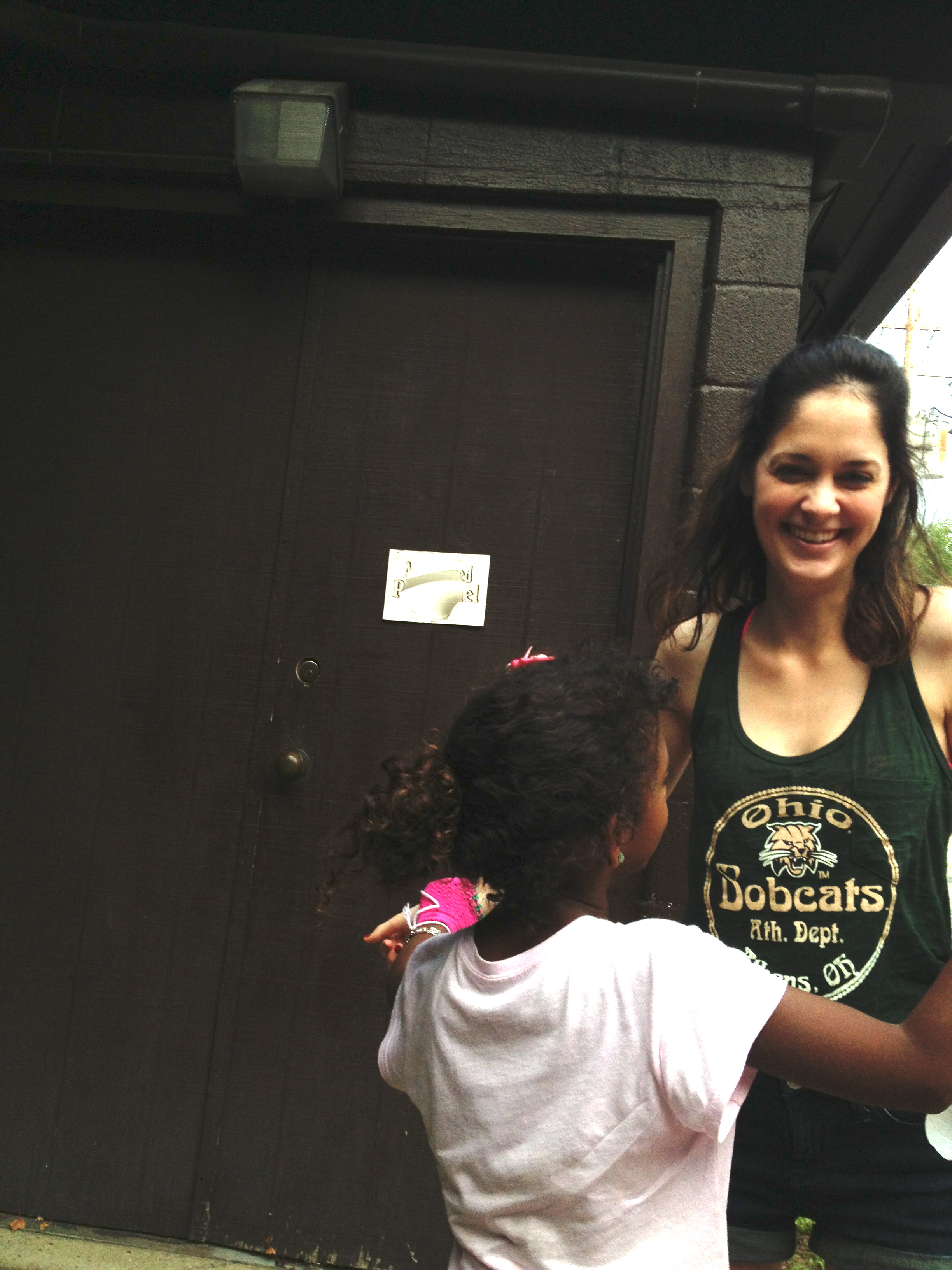
As a young female, vanity has always been a (sometimes unwelcome) concern in my life. I’ll check my outfit in the mirror several times before leaving the house, and sometimes I’ll even head out feeling like even after spending two hours getting ready, I still could look better. I obsess over the clearness of my skin and cover “blemishes” with as much caked on make-up as possible. I dye my hair to cover premature grays, I try to buy trendy clothes and accessories, I primp constantly. I put so much effort into looking seemingly suitable for public eyes, and then I spend less than five minutes with a sloppy, messy, carefree little girl and suddenly she has me questioning every minute effort. She’s wearing multi-colored, striped cotton leggings, a bright pink t-shirt with a daisy on it and lime green Crocs. Not to mention her hair is all kinds of crazy and her hands are far from clean. But the only time this little one looks in the mirror is to check my face painting handiwork before proceeding to jump up in down in utter glee. If only we could gather up this loosey-goosey, untroubled childhood attitude and keep it with us as we grow older.

When you ask a child, “why are you doing that?” it isn’t uncommon for his or her response to be, “because it’s fun!” If you asked me why I’m applying for jobs, I would most certainly say because I need to not because it’s fun. Why don’t we do more things just because we enjoy them? As adults, we find plenty of excuses and reasons why we are no longer able to do something we once enjoyed. Money is tight, time is limited, getting too old – so many tired, worn out excuses that get way too much screen time. “Katie, why are you pouring glue in your hands?” Because it’s fun to peel off the dried glue, duh! “Riley, why are you acting like a puppy?” Because it’s fun to pretend! We should do what we want even if it has no value other than pure, uninhibited enjoyment.

And what’s more is that children are unafraid to openly express their emotions. If they miss their mommy and daddy, they’ll cry and screech and yell it at the top of their lungs without fear of embarrassment. If they missed you, they’ll come storming down the road to meet you the second you come around the bend, happily screaming your name, take a running leap and land in your arms. If you hurt their feelings when you call them a dodo bird poopy brain, they have no problem telling you straight to your face. If they have to go potty and you tell them to wait a few minutes, they’ll pull on your sleeve and make demands until you attend to their needs. We grownups tend to mask our feelings or hide them and sometimes we aren’t fully honest when we should be. Leah has no problem telling me that I need to hit the gym, but some of my best girlfriends wouldn’t dare even hint at it! If I tell Noelle I’m sad today, she’ll tell me to stop being sad and just be happy. The point is, kids tell you how it is (at least in their own eyes) and it’s refreshing. Why hold back?

And finally, one of my favorite things I’ve learned from kids is how to turn mundane tasks into a game. Picking up toys can turn into a fun basketball game as you chuck each one into the toy box. The rewards system is highly effective as a kid and an adult too. Finish this blog before midnight and I can have a second glass of champagne! Pick up all the crayons and you can have a piece of candy! Life doesn’t have to be boring if we can find ways to make it fun. Disappointments just give us a reason to look forward to improvements. Success is so sweet because we know it took us a few oopsies to get there. Just because we grow up doesn’t mean we should lose our innocent excitement; it doesn’t mean we should stop thinking the word poop is funny; it doesn’t mean we shouldn’t eat milk and cookies until our bellies ache; it doesn’t mean we should grow up and forget to live. Life is still exciting and new each day and I think it would do us all some good if we acknowledged and accepted our inner child- sticky hands, smelly feet, silliness and all.