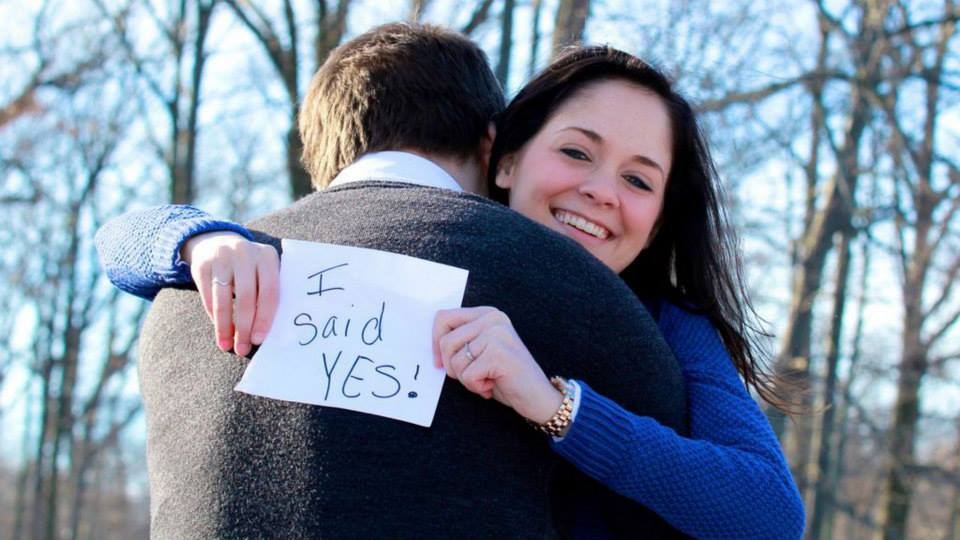
When you’re young, you never associate paperwork and deadlines with a wedding. Planning a wedding is meant to be romantic and exciting, and it’s supposed to be that “making your dreams come true” kind of time. Dresses and tuxes and flowers and dates and parties and venues – all of these things happily float around in your head until it all comes together, culminating in the best day of your life. Well, that may be true if your significant other has the same nationality as you. You could throw together a wedding tomorrow if you were in a rush and get on with your lives together immediately! But some of us aren’t that lucky.
I love my fiancé more than life. I’m so happy I met him and I’m thrilled to some day call him my husband. But while I’m still excited to actually get married, the planning process of figuring out how to actually marry my English fiancé has almost completely sucked the excitement out of my engagement. Isn’t that awful? Here’s why:
For my fiancé to come here, we would have to apply for a visa. Have you seen or heard of the show on TLC called “90 Day Fiancé?” It’s kind of like that, except way more complicated. If you happened to watch the program, you’ll have noticed that when it first started, each couple mentioned how they’ve been with his or her significant other for at least a year or more. That duration is important to note because that means there was about a 6 month block of time where they were just sitting around waiting for the visa to simply get accepted. Why would it take that long? Well, to get what’s called the K-1 Visa, there are roughly one thousand steps. First, you have to simply petition for the visa. That’s not applying, folks. You have to state your case before you can even apply! And this petition, in which you must provide biographic information (proof of citizenship, census evidence/school records or/certificates of religious rites/every minute detail of your personal existence), a police certificate (preferably a clean one!), evidence showing that you plan to marry within 90 days of entry in the U.S., evidence that you have met in person, more forms (G-325A) specially formatted passport-style photographs taken within 30 days of filing the petition and other little details are all for the low, low cost of $400! After all that stuff is turned in, then the U.S. government may still turn around and request more evidence or require you to be interviewed before accepting your petition. When and if your petition is accepted, THEN you can apply for the actual visa. This part also includes the interview. You know, like in the movie The Proposal when Sandra Bullock and Ryan Reynolds try to get married. Seriously, it’s very similar. If all your paperwork checks out and you can prove on paper that you’re not making up your whole history and relationship, then you have to sit before a government employee and answer any questions they want to ask about you and your relationship. I’ve been told that these questions can get quite personal as well, so that sounds fun, huh? I guess you just have to hope that your relationship sounds legitimate! Plus, at this interview, you’ll also have to bring with you an incredibly insane amount of more paperwork and evidence. This stuff includes things like medical records and a recent examination demonstrating your current health, evidence of financial support (I-134) that proves that your partner will never become a financial liability on the U.S., more evidence of the relationship’s validity, more photos and, of course, payment of all the fees involved. And again, even after all this, the government can still ask for MORE. Waiting for all of this to come through can take anywhere from a few weeks to a few months.. or a year. So let’s say after all this work, the visa is approved and your partner can now come and marry you in the U.S. When they show up and go through customs, there is still the possibility that they are not granted admittance into the country. Nice, huh? If you can pass go, then you’ve got 90 days to tie the knot or get gone, buzzo! Once that rushed marriage has taken place, you can apply for a green card to become a permanent resident. Yup, more paperwork, more waiting and more gambling. Even if you’ve gotten married, you can’t legally work in the country until you’ve applied for and been granted authorization to do so (I-485). So after you’ve dropped a couple thousand dollars on applications, petitions and forms, you may have tallied anywhere from 6 to 8 months worth of just waiting. Let’s hope that through all that stress, you were still able and excited to plan your wedding to take place in that 90 day time block!
What’s more is that while you’re waiting for your significant other to be able to move to you and be with you for good, you put your visa acceptance at risk if you plan any long visits to see each other during the waiting period. Why? Well, you have a love interest in the country and you’ve already expressed a desire to stay with them, so who’s to say you won’t just pop over for a visit and then never leave? Can’t have that! That’s illegal immigration!
So after I became frustrated and concerned that I couldn’t personally meet the threshold of the minimum income requirement to prove financial stability, and how the wait time was anywhere from half a year to 8 months, I turned to see if UK immigration was an easier process. Although very similar in terms of the process, I found that the red tape was a little looser and more flexible. Financial requirements aren’t as rigid and allow for more options, the paperwork and applications are processed and accepted (or denied) in a much quicker time frame (as soon as a few weeks!), and there aren’t fees on fees on fees each time a new form is filled out. However, the process is still just as much of a gamble, still very costly, very demanding and stressful and more or less the same as the U.S. process. The main things that appealed to me were the possibility of moving quicker and the ease of understanding the application process.
So while we wait the required 6 months that is necessary since we both accepted new jobs and need to do so in order to meet the financial requirements for either country’s visa, all I can do is anticipate and prepare as much as possible for the upcoming work involved in getting married. Now you can see why it’s upsetting and difficult to plan your long-awaited for wedding (seriously long) when you’ve got so many other things on your mind! The outside support from friends and family who are genuinely excited for our happiness helps redirect the focus from paperwork to bliss. Nevertheless, as with many things in life, there are naysayers that chime in, and sometimes it seems they’re louder than the cheerleaders. Love found across countries is a seesaw dipping back and forth between pure joy and stress.
And although I wouldn’t trade my fiancé for anything or anyone in the world and I don’t regret saying yes to marriage, I urge you to look at your own situation and learn to appreciate things that you two can do that isn’t a guarantee for others. Be able to look at your relationship and say, “yes, this IS a lucky kind of love” and learn to stifle your complaints about doing long distance or arguing over where you want to live or what have you. There are always ways in which it could be harder and there will always be people out there who may have things a bit more complicated. Love your love and always be grateful. And always remember, through any and all the stress, you’ve always got each other. Together is where you want to be, and do what you’ve got to do to get there. Whatever it takes!

 As I sip my coffee...