What hurts

Pain: The physical feeling caused by disease, injury or something that hurts the body.

We have all experienced pain in some form or another in our lifetimes. If the world is kind, we hope that it is only a temporary and brief experience. And even if we don’t get a say in how long the pain lasts, at least we get to cling to the hope that it will eventually lapse so that we can then switch gears to healing instead of hurting. But what happens when the pain not only has no end date, but also has an imminent promise of getting worse? Then what?

I mentioned last year the medical issues that were overwhelming my husband and me (yep, we got married!). We didn’t have concrete answers in regards to his nerve condition back then, so we were still able to see a glimmer of hope for improvement. The possibility of pain relief was still at least obtainable in our hopeful minds because questions weren’t yet answered. Unfortunately and fortunately (it’s a mixed-bag of emotions, here), we now have that definitive diagnosis of Complex Regional Pain Syndrome. After yet another foot surgery in an attempt to improve his walking situation, James came out of it with seemingly more chronic, daily pain. So here’s what we’ve learned in the last few months that we didn’t know or weren’t told before:

1.) CRPS is not only incurable, but has a 90% chance of worsening and spreading to other parts of the body after time.
2.) There is no medicine on the market as of yet that successfully manages CRPS pain or guarantees any long-term relief. The medicines that doctors typically go for are prescribed on a strictly trial-and-error basis. Some possible treatments can also be super risky.
3.) Forcing yourself to push through the pain is the only way to try and mitigate or slow down the risks of the condition spreading (they think), but the minute you allow yourself to rest is when the pain can get its most excruciating.
4.) Doctors won’t let you just cut your foot off and call it a day if the idea of living your life in constant pain doesn’t appeal to you.
5.) The experts and specialists don’t really have good answers for you because they don’t understand it either.
6.) BUT James doesn’t NEED to use crutches or a foot cast anymore… if he can stand the pain.

So now what? My husband has an invisible disease that nobody fully understands and it has not only become the focal topic of our lives, but it also determines the majority of our actions and choices. We don’t realize how important and integral walking and standing are until the act of doing either incurs unbearable pain. Or participating in a conversation and suddenly being wracked with disorienting and distracting pain, unable to pay enough attention to really “be” where you are. I would never wish this condition on my worst enemy, yet I have to sit idly by watching the person I love the most living with it. That’s a type of pain I never expected I’d have to live with for myself either. For the rest of our lives.

I love my husband. I fully recognize that this awful situation is not something he brought on himself, and I have never and will never blame him for it. But it is certainly something I never could’ve prepared for, mentally or emotionally. I have moments of agonizing helplessness and guilt when I find that I have no offers of advice or suggestions to give James in order to alleviate the pain. I often find myself at a loss for words simply because I know nothing I say can stop him from hurting. That is a type of emotional pain I didn’t even know existed. There are so many different facets of pain, and I’m uncovering a whole slew of them lately. Whether we’re together or apart,  I’m constantly worried about his comfort level, wanting to protect him from any possible dangers that could increase his pain, but also trying to take care of myself as well. I morphed into caretaker mode because nobody wants to watch their loved ones suffer – we want to help. But I found that as I desperately tried to find ways to help, usually without success, I was letting the worry consume me so much that I stopped caring about my own well being. Even still, I struggle to find a balance between looking after my husband and looking after myself. I wonder, is this how first-time mothers feel as well – scared and unsure? Although, at least they can learn how to fix and/or improve things to encourage better quality of life for their children, right? Or they can ask professionals who can help too. I feel like this situation is so unique that there isn’t any one thing or person I can turn to for help, and it’s not something that sits well with me. Especially with the thought of the pain spreading. What happens if the pain becomes so intense down the road that he can no longer move, work, live a joyful life? How do I deal with that then? Then I remember that speculating what could happen later doesn’t help the now, so I try and drop it. But as with most things, that’s easier said than done.

I have gained a whole new respect and admiration for individuals with disabilities (seen or unseen). For those of you fighting off illnesses, caring for loved ones who are unable to care for themselves, living with pain – I salute you. You are far stronger people than I am, and I aspire to achieve the same strength. You don’t receive enough credit for the effort you put into creating and living a good life despite any real or imagined shortcomings you’ve been dealt. You face obstacles not with fear or defeat, but with determination. We are only given one life in this wicked world, so no matter what, we have to learn how to love it. Even if it hurts.

I’m learning as I go, and despite the agony we both feel sometimes, I’m so happy James and I have each other for support. And I will do whatever I can to help raise awareness and fund research projects so that debilitating, inhibiting, invisible medical conditions like CRPS can be eradicated. I can’t do everything.. but I can do something.

That’s the thing about pain. It demands to be felt.
Size stigmas

Image

Women obsess over size. Weight, height – what have you – it’s like we’ve been conditioned to demand this unobtainable idea of size perfection the split second we’re born. And while there appears to be this gung-ho feminist/girl power movement cropping up all over the world with cheers of acceptance to those who don’t “meet” society’s idea of “attractive size,” I’m sitting over here thinking.. well, wait a minute. This is all fine and dandy, but what about girls like me? Dove’s “Love Your Body” campaign sounds inspirational and empowering, but it seems hyper-focused on the idea that there is such a thing as too skinny, and if you fall under that category, there’s something wrong with you. Real women have curves, right? Actress Sophia Bush struck up a campaign declaring that “zero is not a size” a few years ago too. And while I sit here, staring at a pile of jeans with tags that read “0,” I’m feeling rather insulted. Women are encouraged to accept their curves and rejoice over them because being rail thin is unhealthy. While in some cases, I can fully stand behind this idea (thinness caused or brought on by eating disorders or self-inflicted harm is obviously not good), those of us healthy women who are naturally petite shouldn’t feel so scrutinized! Why are “plus sized” women getting high fives while petite women are getting concerned looks?

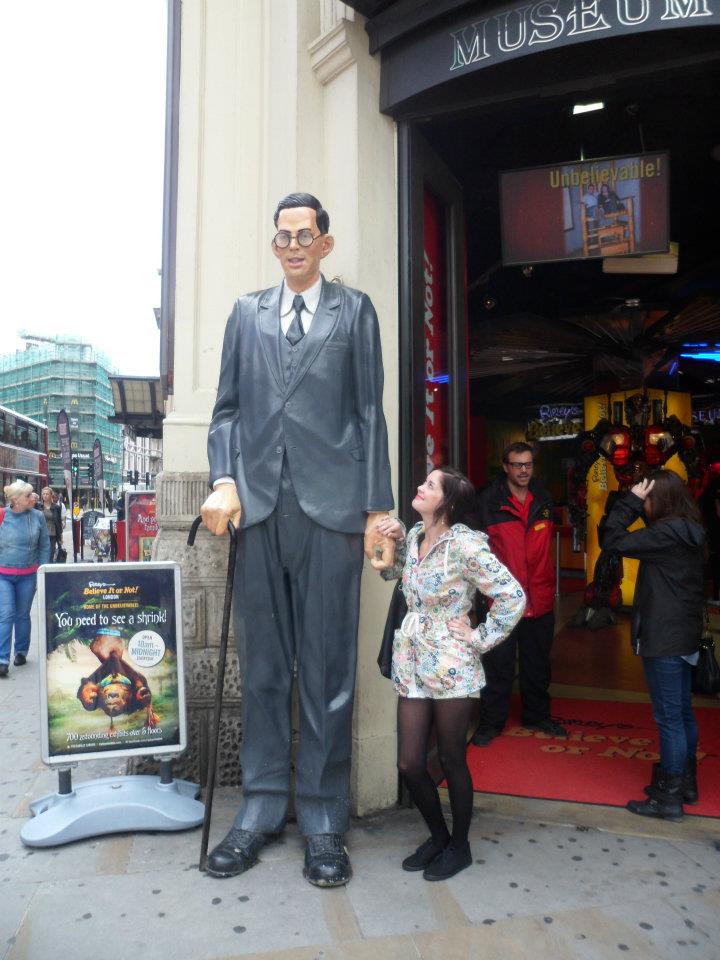
I have always been petite. My family jokes that I was the runt of the litter, but it’s quite honestly accurate. I stand 5’2″ and hover between 90 and 100 pounds. My entire life, I’ve always had people make jokes about my size, pick me up against my will just to see how light I was, analyze my meals, hold things up high so I couldn’t reach them.. childish things that they may have thought were funny, but 20 some years later, the jokes get old. I’d even argue that I am made fun of for my size more often than someone who may be overweight. Why? Because it’s less likely for someone to feel brave enough to pick on an adult because they are overweight than to pick on someone who’s tiny. It can’t be insulting if you’re not calling them fat, right? Wrong. And it’s not only peers who chime in. I avoid seeing doctors as often as possible partly because I know they’ll accuse me of having an eating disorder. I do not have a disorder, but when people point out my perceived deficiencies, I’ll admit that it’s hard not to dwell on them. I recently started a new job that requires lifting and traveling with fairly heavy camera equipment. It never fails that on any given day, someone, whether it be a coworker or stranger who sees me on the street, makes a comment about how it looks like I’m struggling and laughs. Usually, I’m not struggling in the slightest because I’ve learned how to adjust with my small body. I believe, for my size, that I’m strong. But if you compare me to an average woman my age, you’re setting me up to fail. I am not average, and on most days, I’m happy about that. But not always.

Certain things in life are harder to handle when you’re “abnormally” small. For instance, shopping instantly becomes a nightmare. Trying on clothes that overwhelm my small figure is a blow to my ego. There are certain articles of clothing that I’ve simply had to give up on because there’s no way I can ever wear something like that unless I get it custom made. Wearing heels draws attention to my very thin legs. Wearing short sleeves exposes my scarily thin arms. Midriff-bearing tops direct all eyes to my very profound ribcage. My every outfit decision is based around the question, “do I look like an adult?” because I am so often teased for looking much younger than I am and I want it to stop. Bathing suits are a topic I can’t even delve into. I’m paranoid when I go out drinking with friends because I worry that I’ll be accused of underage drinking even with two forms of ID. I avoid eating in front of other people as much as possible because I worry they are judging not only what I’m eating, but how much I wind up eating. This makes going out to eat with friends much more stressful than it should be. I can’t reach a lot of things that most average-sized women can reach. I’ve walked away from many things that I wanted simply because I couldn’t reach it on my own and I was too embarrassed to ask for help. And while many things are merely inconveniences, a fair portion of the problems associated with my size are the mental blows to my psyche thanks to the negative stigma attached to small size.

Recently, I’ve been trying to shop for a wedding dress. While most girls get over-the-moon excited for this process, I was honestly dreading it. Most wedding dress designers don’t make gowns that would comfortably fit my frame. It’s a fair estimate to say that the smallest available size tends to be a size 2. You slip that on my body, and I’ll be swimming in it! And while I understand the fact that every gown is altered to fit the bride, tailoring costs extra the more you need done. And I’d need a lot of work! But I told myself to ignore the fact that every dress I try on will be gigantic and to envision how the final product will look. Now, if you’ve never tried to do this, let me tell you one thing: it’s really freaking hard to do. Especially when the majority of the gown is smushed up and pulled back and completely distorted from its original silhouette. It’s not easy to convince yourself that you look beautiful when you feel like your body is corrupting the whole image.

So my point is this: although I’m all for empowering women, I think we need to focus more on individuality rather than targeting certain groups and trying to lift them up over others. Acceptance, above all else, should be the focus. Plus sized women shouldn’t be cheered on if it means stomping on thin girls in the process. We need to support one another to encourage mentally and physically healthy women. And we also need to learn to accept ourselves. I have good days and I also have days where I could use encouragement. I’ve learned to put the perks of being petite above the pitfalls. And overall, I wouldn’t change who I am or how I am, but it’d be nice to feel like my size doesn’t immediately stigmatize me in society. That would be a movement I can get behind.

Once you accept your “flaws,” no one can use them against you.