Size stigmas

Image

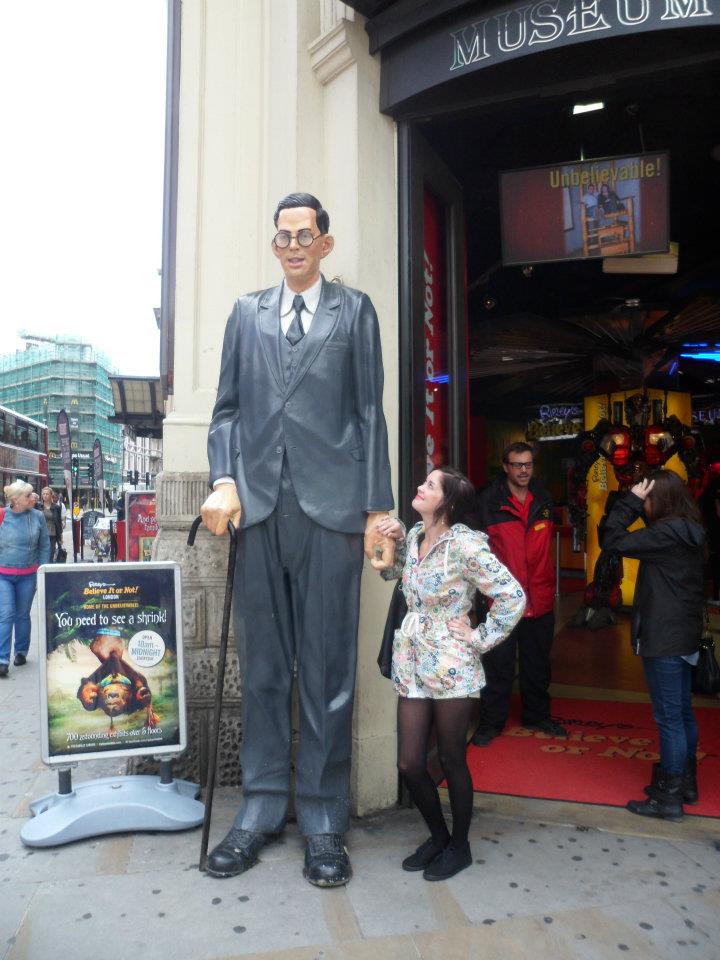
Women obsess over size. Weight, height – what have you – it’s like we’ve been conditioned to demand this unobtainable idea of size perfection the split second we’re born. And while there appears to be this gung-ho feminist/girl power movement cropping up all over the world with cheers of acceptance to those who don’t “meet” society’s idea of “attractive size,” I’m sitting over here thinking.. well, wait a minute. This is all fine and dandy, but what about girls like me? Dove’s “Love Your Body” campaign sounds inspirational and empowering, but it seems hyper-focused on the idea that there is such a thing as too skinny, and if you fall under that category, there’s something wrong with you. Real women have curves, right? Actress Sophia Bush struck up a campaign declaring that “zero is not a size” a few years ago too. And while I sit here, staring at a pile of jeans with tags that read “0,” I’m feeling rather insulted. Women are encouraged to accept their curves and rejoice over them because being rail thin is unhealthy. While in some cases, I can fully stand behind this idea (thinness caused or brought on by eating disorders or self-inflicted harm is obviously not good), those of us healthy women who are naturally petite shouldn’t feel so scrutinized! Why are “plus sized” women getting high fives while petite women are getting concerned looks?

I have always been petite. My family jokes that I was the runt of the litter, but it’s quite honestly accurate. I stand 5’2″ and hover between 90 and 100 pounds. My entire life, I’ve always had people make jokes about my size, pick me up against my will just to see how light I was, analyze my meals, hold things up high so I couldn’t reach them.. childish things that they may have thought were funny, but 20 some years later, the jokes get old. I’d even argue that I am made fun of for my size more often than someone who may be overweight. Why? Because it’s less likely for someone to feel brave enough to pick on an adult because they are overweight than to pick on someone who’s tiny. It can’t be insulting if you’re not calling them fat, right? Wrong. And it’s not only peers who chime in. I avoid seeing doctors as often as possible partly because I know they’ll accuse me of having an eating disorder. I do not have a disorder, but when people point out my perceived deficiencies, I’ll admit that it’s hard not to dwell on them. I recently started a new job that requires lifting and traveling with fairly heavy camera equipment. It never fails that on any given day, someone, whether it be a coworker or stranger who sees me on the street, makes a comment about how it looks like I’m struggling and laughs. Usually, I’m not struggling in the slightest because I’ve learned how to adjust with my small body. I believe, for my size, that I’m strong. But if you compare me to an average woman my age, you’re setting me up to fail. I am not average, and on most days, I’m happy about that. But not always.

Certain things in life are harder to handle when you’re “abnormally” small. For instance, shopping instantly becomes a nightmare. Trying on clothes that overwhelm my small figure is a blow to my ego. There are certain articles of clothing that I’ve simply had to give up on because there’s no way I can ever wear something like that unless I get it custom made. Wearing heels draws attention to my very thin legs. Wearing short sleeves exposes my scarily thin arms. Midriff-bearing tops direct all eyes to my very profound ribcage. My every outfit decision is based around the question, “do I look like an adult?” because I am so often teased for looking much younger than I am and I want it to stop. Bathing suits are a topic I can’t even delve into. I’m paranoid when I go out drinking with friends because I worry that I’ll be accused of underage drinking even with two forms of ID. I avoid eating in front of other people as much as possible because I worry they are judging not only what I’m eating, but how much I wind up eating. This makes going out to eat with friends much more stressful than it should be. I can’t reach a lot of things that most average-sized women can reach. I’ve walked away from many things that I wanted simply because I couldn’t reach it on my own and I was too embarrassed to ask for help. And while many things are merely inconveniences, a fair portion of the problems associated with my size are the mental blows to my psyche thanks to the negative stigma attached to small size.

Recently, I’ve been trying to shop for a wedding dress. While most girls get over-the-moon excited for this process, I was honestly dreading it. Most wedding dress designers don’t make gowns that would comfortably fit my frame. It’s a fair estimate to say that the smallest available size tends to be a size 2. You slip that on my body, and I’ll be swimming in it! And while I understand the fact that every gown is altered to fit the bride, tailoring costs extra the more you need done. And I’d need a lot of work! But I told myself to ignore the fact that every dress I try on will be gigantic and to envision how the final product will look. Now, if you’ve never tried to do this, let me tell you one thing: it’s really freaking hard to do. Especially when the majority of the gown is smushed up and pulled back and completely distorted from its original silhouette. It’s not easy to convince yourself that you look beautiful when you feel like your body is corrupting the whole image.

So my point is this: although I’m all for empowering women, I think we need to focus more on individuality rather than targeting certain groups and trying to lift them up over others. Acceptance, above all else, should be the focus. Plus sized women shouldn’t be cheered on if it means stomping on thin girls in the process. We need to support one another to encourage mentally and physically healthy women. And we also need to learn to accept ourselves. I have good days and I also have days where I could use encouragement. I’ve learned to put the perks of being petite above the pitfalls. And overall, I wouldn’t change who I am or how I am, but it’d be nice to feel like my size doesn’t immediately stigmatize me in society. That would be a movement I can get behind.

Once you accept your “flaws,” no one can use them against you.
The cost of love

Image

When you’re young, you never associate paperwork and deadlines with a wedding. Planning a wedding is meant to be romantic and exciting, and it’s supposed to be that “making your dreams come true” kind of time. Dresses and tuxes and flowers and dates and parties and venues – all of these things happily float around in your head until it all comes together, culminating in the best day of your life. Well, that may be true if your significant other has the same nationality as you. You could throw together a wedding tomorrow if you were in a rush and get on with your lives together immediately! But some of us aren’t that lucky.

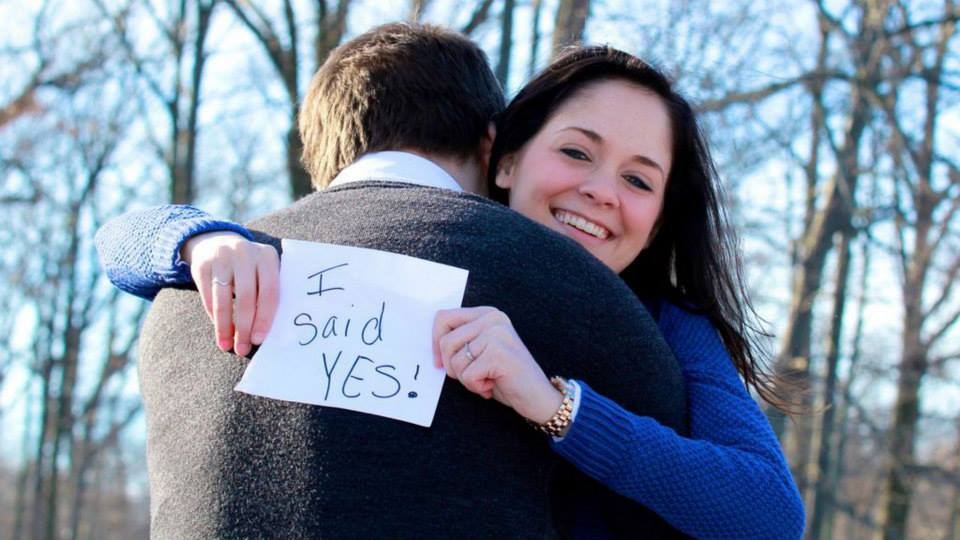
I love my fiancé more than life. I’m so happy I met him and I’m thrilled to some day call him my husband. But while I’m still excited to actually get married, the planning process of figuring out how to actually marry my English fiancé has almost completely sucked the excitement out of my engagement. Isn’t that awful? Here’s why:

For my fiancé to come here, we would have to apply for a visa. Have you seen or heard of the show on TLC called “90 Day Fiancé?” It’s kind of like that, except way more complicated. If you happened to watch the program, you’ll have noticed that when it first started, each couple mentioned how they’ve been with his or her significant other for at least a year or more. That duration is important to note because that means there was about a 6 month block of time where they were just sitting around waiting for the visa to simply get accepted. Why would it take that long? Well, to get what’s called the K-1 Visa, there are roughly one thousand steps. First, you have to simply petition for the visa. That’s not applying, folks. You have to state your case before you can even apply! And this petition, in which you must provide biographic information (proof of citizenship, census evidence/school records or/certificates of religious rites/every minute detail of your personal existence), a police certificate (preferably a clean one!), evidence showing that you plan to marry within 90 days of entry in the U.S., evidence that you have met in person, more forms (G-325A) specially formatted passport-style photographs taken within 30 days of filing the petition and other little details are all for the low, low cost of $400! After all that stuff is turned in, then the U.S. government may still turn around and request more evidence or require you to be interviewed before accepting your petition. When and if your petition is accepted, THEN you can apply for the actual visa. This part also includes the interview. You know, like in the movie The Proposal when Sandra Bullock and Ryan Reynolds try to get married. Seriously, it’s very similar. If all your paperwork checks out and you can prove on paper that you’re not making up your whole history and relationship, then you have to sit before a government employee and answer any questions they want to ask about you and your relationship. I’ve been told that these questions can get quite personal as well, so that sounds fun, huh? I guess you just have to hope that your relationship sounds legitimate! Plus, at this interview, you’ll also have to bring with you an incredibly insane amount of more paperwork and evidence. This stuff includes things like medical records and a recent examination demonstrating your current health, evidence of financial support (I-134) that proves that your partner will never become a financial liability on the U.S., more evidence of the relationship’s validity, more photos and, of course, payment of all the fees involved. And again, even after all this, the government can still ask for MORE. Waiting for all of this to come through can take anywhere from a few weeks to a few months.. or a year. So let’s say after all this work, the visa is approved and your partner can now come and marry you in the U.S. When they show up and go through customs, there is still the possibility that they are not granted admittance into the country. Nice, huh? If you can pass go, then you’ve got 90 days to tie the knot or get gone, buzzo! Once that rushed marriage has taken place, you can apply for a green card to become a permanent resident. Yup, more paperwork, more waiting and more gambling. Even if you’ve gotten married, you can’t legally work in the country until you’ve applied for and been granted authorization to do so (I-485). So after you’ve dropped a couple thousand dollars on applications, petitions and forms, you may have tallied anywhere from 6 to 8 months worth of just waiting. Let’s hope that through all that stress, you were still able and excited to plan your wedding to take place in that 90 day time block!

What’s more is that while you’re waiting for your significant other to be able to move to you and be with you for good, you put your visa acceptance at risk if you plan any long visits to see each other during the waiting period. Why? Well, you have a love interest in the country and you’ve already expressed a desire to stay with them, so who’s to say you won’t just pop over for a visit and then never leave? Can’t have that! That’s illegal immigration!

So after I became frustrated and concerned that I couldn’t personally meet the threshold of the minimum income requirement to prove financial stability, and how the wait time was anywhere from half a year to 8 months, I turned to see if UK immigration was an easier process. Although very similar in terms of the process, I found that the red tape was a little looser and more flexible. Financial requirements aren’t as rigid and allow for more options, the paperwork and applications are processed and accepted (or denied) in a much quicker time frame (as soon as a few weeks!), and there aren’t fees on fees on fees each time a new form is filled out. However, the process is still just as much of a gamble, still very costly, very demanding and stressful and more or less the same as the U.S. process. The main things that appealed to me were the possibility of moving quicker and the ease of understanding the application process.

So while we wait the required 6 months that is necessary since we both accepted new jobs and need to do so in order to meet the financial requirements for either country’s visa, all I can do is anticipate and prepare as much as possible for the upcoming work involved in getting married. Now you can see why it’s upsetting and difficult to plan your long-awaited for wedding (seriously long) when you’ve got so many other things on your mind! The outside support from friends and family who are genuinely excited for our happiness helps redirect the focus from paperwork to bliss. Nevertheless, as with many things in life, there are naysayers that chime in, and sometimes it seems they’re louder than the cheerleaders. Love found across countries is a seesaw dipping back and forth between pure joy and stress.

And although I wouldn’t trade my fiancé for anything or anyone in the world and I don’t regret saying yes to marriage, I urge you to look at your own situation and learn to appreciate things that you two can do that isn’t a guarantee for others. Be able to look at your relationship and say, “yes, this IS a lucky kind of love” and learn to stifle your complaints about doing long distance or arguing over where you want to live or what have you. There are always ways in which it could be harder and there will always be people out there who may have things a bit more complicated. Love your love and always be grateful. And always remember, through any and all the stress, you’ve always got each other. Together is where you want to be, and do what you’ve got to do to get there. Whatever it takes!

No kidding

“If you’re feeling blue, try painting yourself a different color.”

Image

As a young adult, the majority of my life has been spent dragging my feet through school hallways and spilling coffee on my clean clothes. In hindsight and after reading many articles on the subject, I probably shouldn’t have started drinking coffee at age 5, but too late to worry about that now. In any case, even though I’ve spent so much time in classrooms, most of my learning experiences happened outside those walls and from nonprofessionals. Honestly, a lot of what I’ve learned came from listening to and spending time with kids. What made me realize this? Well, I was sitting here thinking, “Gosh, I really want a glass of champagne, but I don’t have a reason to celebrate and maybe I really shouldn’t.” And after I thought about it, I changed my mind and decided isn’t being alive a good enough reason to celebrate? A kid wouldn’t ask, “should I eat this mud pie?” A kid would simply do it. I may have grown up and I’m much more capable of grasping the concept of potential consequences, but I don’t want it to stifle my freedom. So then this got the gears turning and now I’m thinking about all the things little munchkins have taught me and why they’re valuable lessons.

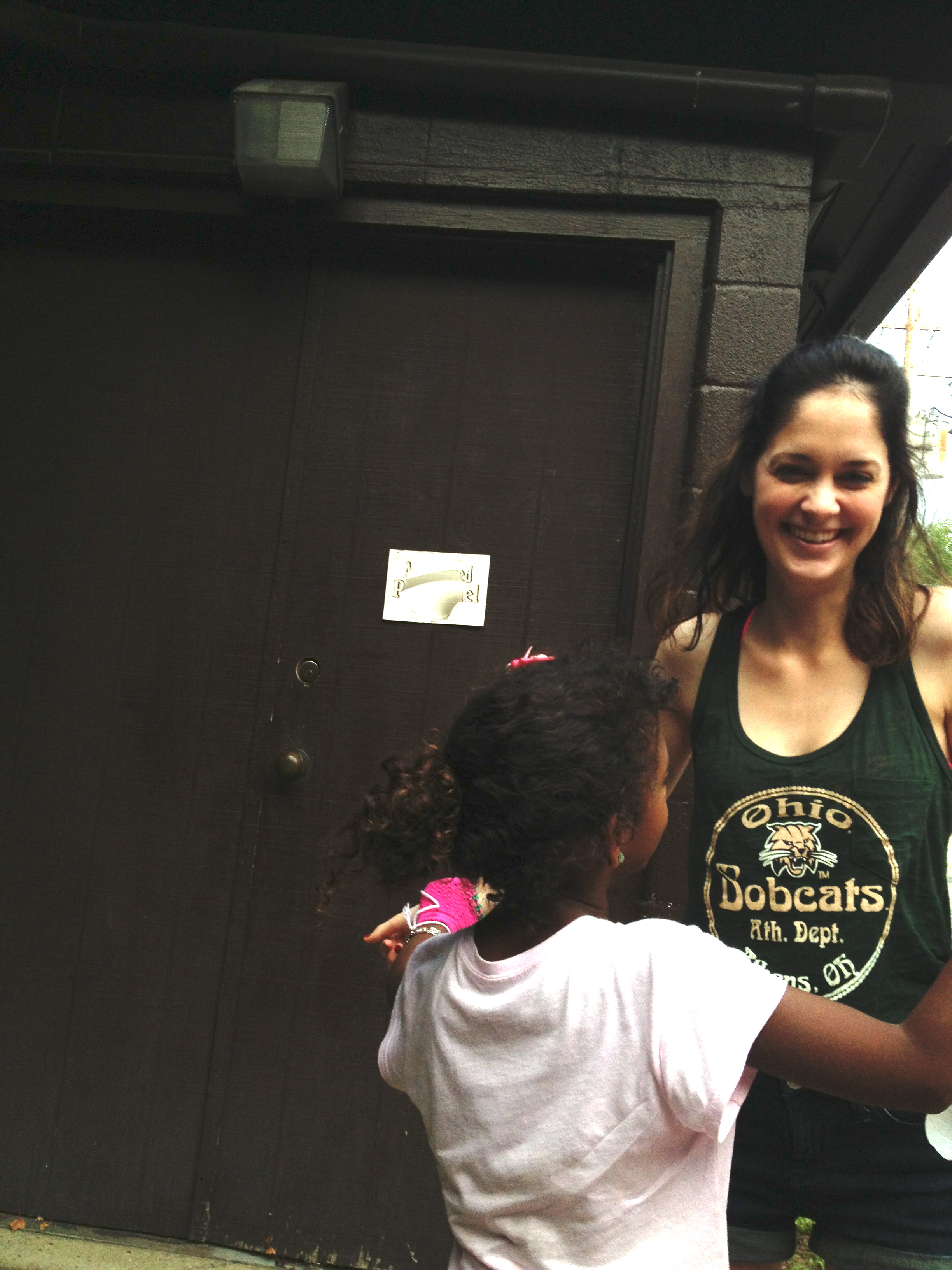
As a young female, vanity has always been a (sometimes unwelcome) concern in my life. I’ll check my outfit in the mirror several times before leaving the house, and sometimes I’ll even head out feeling like even after spending two hours getting ready, I still could look better. I obsess over the clearness of my skin and cover “blemishes” with as much caked on make-up as possible. I dye my hair to cover premature grays, I try to buy trendy clothes and accessories, I primp constantly. I put so much effort into looking seemingly suitable for public eyes, and then I spend less than five minutes with a sloppy, messy, carefree little girl and suddenly she has me questioning every minute effort. She’s wearing multi-colored, striped cotton leggings, a bright pink t-shirt with a daisy on it and lime green Crocs. Not to mention her hair is all kinds of crazy and her hands are far from clean. But the only time this little one looks in the mirror is to check my face painting handiwork before proceeding to jump up in down in utter glee. If only we could gather up this loosey-goosey, untroubled childhood attitude and keep it with us as we grow older.

When you ask a child, “why are you doing that?” it isn’t uncommon for his or her response to be, “because it’s fun!” If you asked me why I’m applying for jobs, I would most certainly say because I need to not because it’s fun. Why don’t we do more things just because we enjoy them? As adults, we find plenty of excuses and reasons why we are no longer able to do something we once enjoyed. Money is tight, time is limited, getting too old – so many tired, worn out excuses that get way too much screen time. “Katie, why are you pouring glue in your hands?” Because it’s fun to peel off the dried glue, duh! “Riley, why are you acting like a puppy?” Because it’s fun to pretend! We should do what we want even if it has no value other than pure, uninhibited enjoyment.

And what’s more is that children are unafraid to openly express their emotions. If they miss their mommy and daddy, they’ll cry and screech and yell it at the top of their lungs without fear of embarrassment. If they missed you, they’ll come storming down the road to meet you the second you come around the bend, happily screaming your name, take a running leap and land in your arms. If you hurt their feelings when you call them a dodo bird poopy brain, they have no problem telling you straight to your face. If they have to go potty and you tell them to wait a few minutes, they’ll pull on your sleeve and make demands until you attend to their needs. We grownups tend to mask our feelings or hide them and sometimes we aren’t fully honest when we should be. Leah has no problem telling me that I need to hit the gym, but some of my best girlfriends wouldn’t dare even hint at it! If I tell Noelle I’m sad today, she’ll tell me to stop being sad and just be happy. The point is, kids tell you how it is (at least in their own eyes) and it’s refreshing. Why hold back?

And finally, one of my favorite things I’ve learned from kids is how to turn mundane tasks into a game. Picking up toys can turn into a fun basketball game as you chuck each one into the toy box. The rewards system is highly effective as a kid and an adult too. Finish this blog before midnight and I can have a second glass of champagne! Pick up all the crayons and you can have a piece of candy! Life doesn’t have to be boring if we can find ways to make it fun. Disappointments just give us a reason to look forward to improvements. Success is so sweet because we know it took us a few oopsies to get there. Just because we grow up doesn’t mean we should lose our innocent excitement; it doesn’t mean we should stop thinking the word poop is funny; it doesn’t mean we shouldn’t eat milk and cookies until our bellies ache; it doesn’t mean we should grow up and forget to live. Life is still exciting and new each day and I think it would do us all some good if we acknowledged and accepted our inner child- sticky hands, smelly feet, silliness and all.