All forward motion counts

img_2419

On my last day of CBT, I spent the full session sitting in my chair sobbing uncontrollably, muttering ‘I’m sorry’ in between gasps for air, ‘I don’t know why this is happening’.

A few weeks before Christmas, I self-referred to a local mental health clinic in an attempt to gain control over my thoughts and to learn coping strategies when things felt like they were spiralling out of control. It was something I’d always thought I should do, but never felt I was ‘bad enough’ to require outside guidance. I’m fiercely independent, and I always want to be able to take care of myself without anyone’s help or input. But as my husband’s condition was worsening and the future was quickly filling up with more and more unknowns, I realised now was the time to admit that I needed help. I genuinely felt like I couldn’t face whatever came next for his treatment unless I was properly prepared. So I signed up for a 6-week CBT one-to-one course (cognitive behavioural therapy), intended to analyse the way I reacted to situations, then work to implement changes to disrupt the negative pattern I had fallen into. It sounded like the perfect thing for me to do: it would be work, but it would come with noticeable results.

I kept it quiet from most everyone. I didn’t want anyone to know that I was working on myself because I didn’t want to admit that 1) there was anything that needed fixing and 2) that it was affecting anything more than myself. To be completely honest, I was so stressed and so panicked and so overwhelmed that it was affecting a lot in my life. My anxiety had gotten so extreme that I wasn’t leaving the house except to go to work, and even there I wasn’t myself. I needed help, but I didn’t need to broadcast it to everyone. I wasn’t ready for that.

So I went home to America for the holidays and tried my best to relax during my time off knowing that when I returned, it was time to get to work. And I did. Every week, I went in for my appointment and talked about how I react to situations and how they’re affecting me and how I thought I could change that. I’m not a therapist, but CBT itself is pretty straight forward. It’s goal-oriented and something you can track progress on paper. Each session I’d walk in with my homework in hand ready to discuss it, and each week I was transparently told how well I was doing. I felt pretty proud of myself, and received the positive affirmations I needed each week to keep me working toward a better me. I was slowly breaking the pattern that I knew played a major role in my recent demise. I was clawing my way back up to the surface each week, and for the most part, it felt pretty damn productive.

On my last day of therapy, I had recently gotten incredibly stressful news about my husband. He was due to get DRG surgery in the coming months, but we hadn’t yet been given a date for the surgery (a type of spinal cord stimulation targeting your dorsal root ganglion nerve bodies at the base of the spinal cord). We were just anxiously awaiting a phone call from the hospital that could’ve literally come any day, which meant most of our life plans were on hold or tentative until we knew what was going on with his surgery. A very tense way to live your life, let me tell you. Anyway, we got that call, suddenly, when we weren’t expecting it in the slightest. But it wasn’t the call that threw me – it was that the hospital called to ask if he could come in for surgery three days later. It’s one thing to know you’re waiting for life-changing surgery, but it’s something completely different when you’re asked to get it done in mere days! However, I thought I handled that experience with ease: I was calm, strategic and gave my husband logical advice. When we finally determined it wasn’t the right time to drop everything for the surgery and we’d rather wait for a later date in which we could plan properly, I hung up the phone feeling proud of myself for handling it like a mature adult. Pre-therapy Tanya would’ve completely crumbled from the stress of the situation, over the need to give the hospital an answer within the hour. Panic would’ve taken over and I would’ve been crying in the bathroom desperately trying to compose myself before getting back to work. But not this time! This time I handled it like a pro, and although I still felt a little jittery from the whole ordeal, I survived and I was able to get back to work comfortably. Or so I thought.

When I eventually had my final therapy appointment, I walked in prepped and ready to tell my therapist how I dealt with a scary, overwhelming scenario like a boss. A ‘look how much I’ve learned already’ show of achievement. I walked in smiling, sat down and started explaining how the situation came up and how I responded to it, and the minute my therapist asked what I would’ve done if my husband had taken the early surgery date… I burst into tears. And they didn’t stop. The entire session. I kept apologising and muttering that I didn’t know why this was happening and I was fine the whole time until I walked in that door and how it didn’t make sense and that I was sorry, sorry, sorry. She told me it was a completely normal, emotional reaction and it just showed how much I cared about my husband, and how that type of worry is and will still be normal. She explained the stress of his medical situation is unique and how I need to stop viewing my tears as weakness. I don’t remember every detail of that appointment mostly because I was utterly embarrassed and surprised at my own reaction. I mostly remember her telling me I was strong and proactive, but that maybe I needed something a little more than CBT and gently suggested I pursue treatment elsewhere. I know she meant well, and I know she’s probably right – I need treatment catered specifically to me and my situation because it’s too, uh, complex, for generic therapy plans. But I couldn’t help feeling like I had failed therapy. I was doing so, so well only to completely lose it on my last day with an emotional reaction I didn’t even know was in me. I thanked her for everything she had taught me along the way, asked her to send me info for further treatment and took my sobbing self to the bathroom to cry in peace. My husband eventually had to meet me on the walk home since it became evident I wasn’t going to compose myself any time soon.

At the end of all this, we did get an appointment date through for his surgery. It’s in a few weeks time, actually. We were able to go away on holiday beforehand to get some sun and proper relaxation before life as we knew it will change. I haven’t yet signed up for new therapy. I still don’t know if I will, and I imagine it hinges on whether or not this surgery goes well. But for now, I’m applying what I have learned so far: I don’t know what will happen after this surgery. I don’t know if it will be the saving grace we’re after or if it’ll send us back to square one. But I do know that these ‘what ifs’ are not helpful, and we’ll tackle the outcome when that day arrives. And I’m still trying to remind myself that I am strong and despite feeling weak more often than not, I have every right to be proud of how far I’ve come so far. This stuff is absolutely terrifying. I wouldn’t wish any of this on my worst enemy. I know I’m going to be emotional when his surgery date arrives, but I know I’ve got some tools to help myself this time around. And if I find myself falling short – I have options. That, in itself, is empowering. There’s no reason I should ever feel I’m going this alone. And it’s about damn time I realised that.

You’re looking for the explanation, the loophole, the bright twist in the dark tale that reverses your story’s course. But it won’t reverse – for me or for you or for anyone who has ever been wronged, which is everyone. Allow your acceptance of the universality of suffering to be a transformative experience. You do that by simply looking at what pains you squarely in the face and then moving on. You don’t have to move fast or far. You can go just an inch. You can mark your progress breath by breath.
Finding home

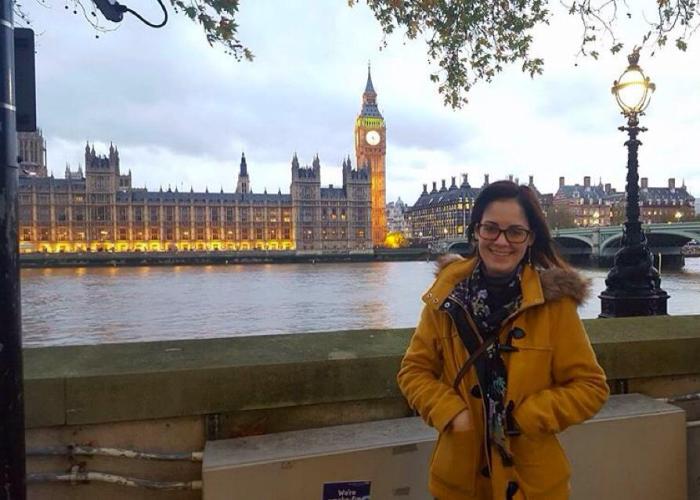
12241591_10153788546021350_2546363106105606442_n-1It’s been six months since I’ve officially relocated to the UK, and to say it’s been a rollercoaster ride is a slight understatement. I anticipated an adjustment period, considering the fact that I was leaving behind everything familiar and opting for complete immersion into a new home, new environment and new people. But despite having lived in the UK for a few months in the summer of 2012, it was far more destabilising this time around. I think the fact that this move was permanent contributed to that emotion. But six months in, I think I’ve found my centre at last… and the ability to write as if I were a native Brit.
Anxious excitement dominated my first month or two, which makes sense because I was eager to close the gap and be here, but I had no idea what life would be like once I actually moved. That realisation started to seep into my brain toward the end of my second month, beginning of the third. My excitement quickly turned serious when I began looking for work to fill my free time and become a contributing member of society. I began this stage with apprehension, knowing full well how difficult it was finding the right job back in the states after graduation and worrying I’d find a similar struggle here. Now that it’s over with and I’ve found work, I feel pretty confident saying it was easier and quicker to find a job than it was a few years ago, but it certainly felt like a never-ending, soul-crushing experience.

It was about when I’d sent out around twenty job applications and the rejection emails started coming through that I felt myself slipping into a darker mind-set. I swiftly went from “I’m going to get a job!” to “I’m never going to get a job,” which, as you can imagine, wasn’t a fun thought train to ride. For the next few months, I was a wretch to be around (shout out to my amazing husband for putting up with this nonsense!), having slipped deeper and deeper into the rabbit hole with each passing day. I slept for ages and never felt rested when I finally pried myself out of bed, I hardly ate, I very rarely took the time to dress myself or make an effort on my appearance and I started questioning my every decision. But from the outside looking in, I made damn sure that any and all my connections back home and on social media thought I was cheery and enjoying my time off work because I didn’t want anyone to think I was pathetic or wasting away in London – even though that’s exactly how I felt.

I’ve battled depression before, but this was a new level I hadn’t experienced yet. I was so deep in it that it took me a very long time to even notice that I was, in fact, depressed. Coupled with the extreme anxiety and desperation to find work, it was a debilitating tug-of-war that left me utterly empty and defeated. Everything ached all the time despite having hardly moved all day every day, headaches plagued me regularly and I sought refuge under the covers more often than not. Part of the time, I wondered if I was genuinely sick and contemplated visiting my GP, but in hindsight, I now know better. Some days I was able to pull myself out of the fog to send out another job application or two, but eventually it became so much work just to think of positive things to say about myself in a cover letter that I just left it… for weeks at a time.

After a few months, I finally understood what was going on and reached out to my husband to help me not only find positivity, but to fully invest myself in finding a job. Thrilled that I was taking the initiative to make a change, he gave me a new perspective and ideas on how to improve my job search tactics. I’m forever grateful to him for his help, because not only did it give me the boost of encouragement I needed at the right time, it also brought responsive replies from the new jobs I was now applying for. These replies eventually led to interviews where I felt I could finally demonstrate, in person, what I could bring to the table.

An onslaught of rejection emails were replaced with interview opportunities and eventually having to choose between two jobs. What started out as a bleak search turned into a plentiful choice, and the sudden change in my outlook was enthusiastically welcomed. I finally felt like I had purpose again, had my footing balanced and could re-emerge into the world bright-eyed and bushy tailed.

These last six months have served as a harsh reminder that life is better handled with some outside help, and it’s okay to ask for words of comfort when they’ve been depleted from your own arsenal. I’m much happier now even compared to when I first arrived on UK soil. My relationship is stronger than ever, I’ve got a job I enjoy in a brand new industry and I’ve learned how to recognise negative thinking and come out the other side a better person. It wasn’t an easy journey and I don’t hope to repeat it any time in the near future, but I think it was necessary to teach me that I have value even when I don’t feel like I do. Starting your life over at a young age is an intoxicating idea, but it’s certainly not for the faint of heart. I’ve had to remind myself that most people would also struggle with such drastic changes all at once, and I’m not a weaker person because of it. I’m indebted to those who helped me realise my worth during a tough time, and encouraged me to find different ways to make London feel like home. I can confidently say that now, that’s exactly what it feels like. Even if it took me six months to get here. Better late than never, right?

Home is where you make it

Women vs the world.

working

A woman’s place is everywhere.

I’ve been debating whether or not to blog about this subject for quite some time now. I’ve found that if I voice my opinion on the matter, I get a lot of backlash, including from close friends and family. But I decided that’s not a good enough reason to stop myself from using my voice. Especially considering I find that blogging serves as a sort of personal therapy as well. To those who may disagree with my opinion: I respect you. However, it remains my opinion built up through my personal experiences.

So here we go!

I’ve almost chalked up two whole years at my current media job. I started out loving it and feeling very proud of my early success in the field, having nabbed the position shortly after graduating college and in a highly competitive, larger market. But the longer I’ve been here, the more certain negative aspects of the job really stand out. The worst of it all? Sexism and ageism in news media.

College professors warned me and other female classmates of sexism in the journalism field. It is no secret that women are held to a much different standard on-camera. After all, we have more outfit choices than a man’s suit-and-tie go-to, so with that alone, we open the floodgates to physical appearance criticism. I knew this going into the field, but I still find it incredibly hard to stomach. However, I’ve thankfully never had to worry about this because I chose an off-camera career path in the media industry. That should instantly eliminate the worst of sexism for me, right? Well, not exactly.

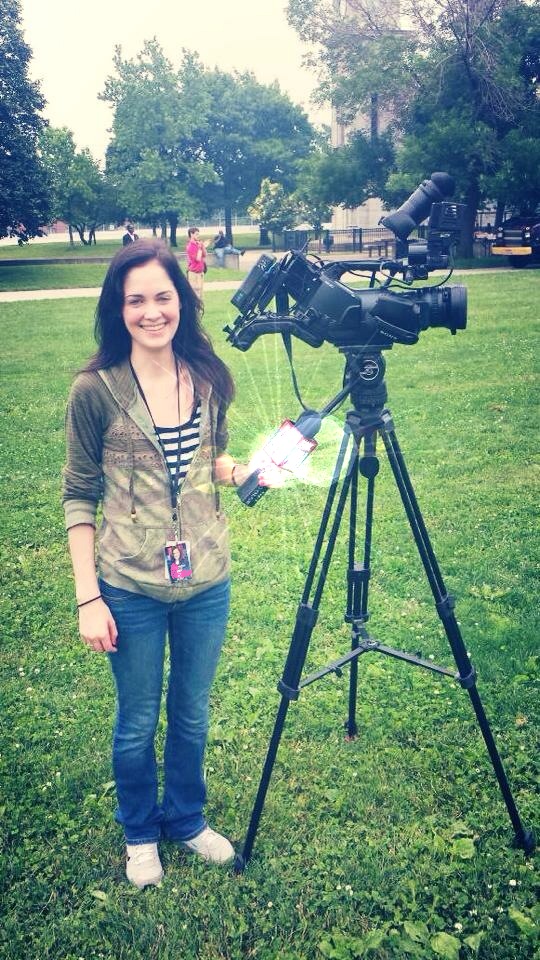
I am one of 5 or less women news photographers employed in my city. And by that, I mean the women who lug around video cameras and tripods to shoot news stories for local TV stations. (Let me be clear: there are some female multimedia journalists, or one-woman bands, but their job has much different expectations than mine. So I’m not counting those individuals in this explanation.) This means, on any given day that I’m sent out with my video camera and tripod, it’s very likely that I’m the only female camera woman in the field that day. Let that sink in for a moment. Out of the four news stations in my area, there are less than 5 women doing what I do.  I have yet to meet another female news photographer from a different station on an assignment. Ever. I’ve only ever worked side-by-side with men, typically aged 35 or older. And as I’ve found out, these men don’t see me – a woman – as their equal. They don’t say it in as many words, so much as strongly imply it as such. However, I think several other factors weigh heavily into their opinion that I’m not as equipped to do their job as a man: my young age + my petite frame.

So with a one-two-three punch, my gender, age and size chalk me up to an inadequate news photographer in many’s eyes. Some of it I can find understanding, though. I can see how experienced photographers view me as less experienced, because in working years, that’s simply a fact. I haven’t been working in the field as long, so I’m sure there’s lots for me to learn. In other words, my young age may be seen as lack of experience. Fine. And my size? Yes, I’m incredibly petite. And it truly does get difficult lugging around a video camera and tripod that are literally as big as I am. I can see how it could be easier to do my job if I were a big, burly, strong man. And finally, I understand that many moons ago, times were different and women would never be in a job like the one I hold now. And I totally understand that some of my male counterparts at these news stations were working during that time, thus my presence now alongside them serves as a shock and something to get used to. I say these things to show that I try to understand where the criticism is coming from before I let it get to me. I’m not closed-minded, I swear! But my patience wanes when the commentary from these men are said like this: “They sent YOU out to a scene like this?” “You need a big, strong man to help you carry those things!” “Are you old enough to be working?” I am not exaggerating when I say I hear these things, along with many other condescending variations, every single day from men doing the same job as I am, to complete strangers who approach me in the field. Especially considering the fact that I’ve always been hyper aware that I’m unlike most people that hold the same job. I don’t need some stranger pointing it out in the rudest way possible on a daily basis, you know? It’s simply unnecessary and not nice at all! I’m sure they wouldn’t appreciate someone saying these things to them either, would they? And I won’t even get into the catcalling and inappropriate advances I get sometimes. That’s an entirely separate blog post on its own! But let’s get one thing straight: I chose this job. So don’t pity me or view me as unfortunate.

When I complain to family and friends, they often ask why I don’t say anything to defend myself. Well, I sort of do. I try and make the exchange into a laughing matter, spitting back with a joke of “oh, yeah! I get a workout every day!” or something along those lines in order to cut the conversation short or make it a non-conversation at all. The problem is, I can’t be rude back. Partly because it’s not in my nature if I don’t know the person, and partly because I need to be a professional when I’m on the job. So despite being surrounded by jerks whose parents didn’t teach them to keep their mouths shut when they don’t have anything nice to say, I can’t let it noticeably get to me because it inhibits my job. When I’m on assignment, I need to get the video I need as quickly as possible, so I don’t have the luxury of getting into a heated debate about why I think I’m capable of performing just as well at my job as a young, petite female. All I can do is fake laugh, get what I need, and make disgusted, annoyed faces or mouth rude words as I walk back to my car. My only concern is excelling at my job, so that remains my number one priority. But the comments stay with me, even long after my work day is done. And that’s the part that bothers me.

Not only do men news photographers in my area not view me as an equal, but complete strangers are constantly coming up to me saying asinine things. No, I’m not an intern. Yes, I can carry all of this equipment all by myself. Yes, a pretty little face like mine actually does prefer to work off-camera. It’s the constant barrage that gets tiring and ruins the job for me. While I understand that with all things, there will be a level of criticism we must endure, I don’t believe that the amount I receive as a professional in my field is on the same level as most of my coworkers. That’s what makes it difficult: having to accept that while this isn’t the norm for most, it is for me. Simply because I’m different.

So let this blog serve as a polite request to kindly keep your criticism to yourself if it in no way helps an individual. My skin is thick enough already, so it needn’t any more. And to those of you young women looking for a career in the news media industry, know this: sexism and ageism is a very real, daily occurrence. And the only way to combat it is to keep encouraging more young women to jump in with us and grow in masses. I’m only one voice, but I know I’m not the only one fighting this. And to all you men (and some women) out there who think I’m incapable of doing my job as well as a man, well tough. Because you know what? I am doing it. And I’m really damn good at it.