Hello world! Did ya miss me? I’ve been noticeably silent for the last few months for a myriad of reasons, but I finally feel strong enough to give a little insight into what’s been going on.
I’ve been planning to write this entry for weeks now, but I admittedly haven’t been ready to face my own feelings. It’s taken a lot of introspection, some research and ultimately a self-help book about ‘living well’ with chronic pain to give me the assurance that it’s okay to put this out into the world. I hope my vulnerability helps someone else, just as other people’s have helped me.
I’ve changed a lot over the course of a few years, and I’ve noticed how much I’ve changed just in these last few months, too. These changes have been mental, emotional and in some cases physical.
I’ve struggled with anxiety all my life, but the last six months alone have magnified my anxiety and stress levels so much that my body has reacted in less than pleasing ways. When dealing with stressful situations in life, it can make it harder to handle when physical manifestations of your stress also prey on your insecurities. Due to the nature of my husband’s degenerative condition, it’s forced us into a more sedentary lifestyle. I can see how my own muscles are deteriorating, how I’m becoming rounder around my waistline, how easy I am to tire. But depression keeps me inactive and I feel trapped in a body I’m not happy with. My skin has been my biggest battle, though. I’ve always tried to look after my skin and I’ve done well keeping it clear and healthy. Until now. My skin has been no match for these raging stress hormones, and each day is a desperate firefighting attempt to mask the acne forcing its way to the surface all over my body. I hate it. Most recently, I’ve apparently been so stressed that I’ve earned unsightly hives and rashes cropping up in places I can’t easily hide. I look in the mirror and see that my body is not happy with the trauma I’ve put it through, yet I feel helpless and unable to make it pretty again. I’ve dealt with scary bouts of vertigo, unrelenting headaches and body aches that obviously are not the result of any physical activity. I am tired. Each day is an exhausting fight to find a pinch of positivity and motivation to just keep going. Some days I can’t. Some days I’m a miserable oaf no one can stand to be around. But that’s okay. And I’m learning that it’s okay not to be okay sometimes.
What’s triggered all this, you ask? Well, as I’ve mentioned before, my husband’s condition has gotten worse. I don’t think I’m strong enough yet to provide specific details into how this has come to pass in such a short span of time, but it’s been rough. We tried some experimental procedures that either didn’t work or made things worse, and the journey ended with an explosive argument with the lead pain clinic specialist kicking us out of our last consultation. It’s hard stuff when an expert looks you square in the face and says they’ve got no other ideas to try. Emotions run high on both ends, as you can imagine. It was a hard day. Harder still to then have to pass that info on to concerned family and friends, who, of no fault of their own, just genuinely don’t and can’t understand on the same level. This is life with chronic pain.
The way this journey has gone, though, has given me a different outlook and approach to a lot of things in my life. I have less patience for things and people who don’t bring me joy. I simply don’t have the time or energy to put effort into things that aren’t or won’t be good for me. There are just more important things to deal with, I’ve realised, and my own wellbeing has to come first.
Some of the changes have been subtle, while others have been very obvious. I’ve filtered out friends I felt were putting unnecessary negativity into my life. Friendship should be fulfilling and positive, and the minute I feel strain I do something about it. Sometimes it’s been as simple as unfollowing people on social media because what they were posting caused me distress of some form, in other cases I’ve just stopped talking to people. I recognise that no friendship is perfect, but when the cons outweigh the pros, I know it’s time to make a change. I hope these people understand that at this point in my life, I have to put myself first and look after my mental health. I’m open to letting people back in, but that doesn’t always happen. I have to do what’s best for me.
Despite my depression, I do my best to make it out and about. The situations lately have impacted and escalated my social anxiety because I know people will ask about my husband, so a lot of times I’ve had to force myself to leave the house insisting that it’ll be good for me. Despite my fear, I still get out and it is usually good for me. I’m actually very proud of myself as this has been one of the battles I’ve struggled with the most. I do not want to become a recluse.
I’ve also been doing my best to address my mental and emotional wellbeing. I’ve tried meditating, I’ve downloaded apps, I’ve researched and read my way into understanding. I’m giving myself a chance to do better and feel better, and I think that’s huge. The thing I’m most proud of is that I’ve finally learned how to walk away when something is causing me too much pain. I know my limits now better than before, and that has made all the difference.
I appreciate the help and support I’ve gotten whilst dealing with this seemingly unbearable situation in life. More than anything, I’m grateful that when I’ve said ‘I’m not ready to talk about it’, my family and friends have respected that and given me the time I’ve needed to process and understand my own feelings in my own time. I imagine it’s hard being on the outside and not knowing how to help, so I’ve got a few pointers for those who want to be involved in any capacity. Above all, please know that if you’re in my life, I am so thankful for you. For the light that you bring when I’ve felt shrouded in darkness, for the fun and humour, for the unwavering support and kind words, for letting me be angry at the world and complaining to no end. Thank you. You’re one of the reasons I get out of bed every morning. Know this.
Here are some helpful pointers and advice on interacting with those living with chronic pain, specific to my situation.
- Don’t let the first question out of your mouth be ‘How’s your husband?’ Better yet, don’t let that be a question at all. No matter how well-intentioned, I don’t like feeling forced into talking about a situation that is physically and mentally painful for me. It’s also very, very personal. Try asking how I’m doing or what I’ve been up to, and talk to me as if I’m my own person with my own life separate to the health situation that is already always hovering over my head. I’ll appreciate talking about things that make me happy and distract me.
- Speaking of distractions, get me out of the house! If you really want to help, I think this is one thing that I am not so very good at. I am constantly worrying about my husband, and although I feel extreme guilt any time I’m out enjoying myself, it’s good for me. Even if it’s as simple as coming over and drinking cheap wine for a few hours, every second spent not fretting or overanalysing is wonderful.
- Don’t say open-ended comments intended to help but put the onus of doing something about it on me. For example, don’t say ‘let me know if there’s anything I can do to help’. That puts all the responsibility on me – the person who is barely keeping her head above water. Please don’t do that to me because I won’t ask for help. Be more specific or take initiative.
- Please, please, please don’t offer unsolicited advice about my husband’s condition. I’ve read everything there is to read, I’ve spoken to so many medical professionals I’ve lost count – I promise that whatever you suggest we’ve either tried already or it’s not something that could help. He has a rare, complex condition that the best brains in the biz still only fractionally understand. I appreciate you wanting to offer advice that will change our lives, but trust me when I say you can’t do that for us.
- Following that, this is not only medically wrong to say, but it’s also hurtful: We don’t want to hear ‘hope he gets better’ or any variation of the sentiment. He will not get better. There is no cure. There is no reversal. There is no actual treatment to make it better. There are only ways to manage the situation in ways you think you can live with. Hope is important, but naivety will get us nowhere.
- Also, please refrain from making comparisons. I respect that you may be trying to be empathetic by comparing that time you sprained your ankle to my husband’s debilitating chronic pain, but I’m sorry… it’s completely different and does the opposite of comforting us. It makes us angry. It makes us feel like you are taking a horrific situation and trying to make it about yourself. And especially: you’re talking about something that gets better when comparatively our situation will not. No matter how well you intended the comment, it feels cruel to us. Your sprained ankle will heal and the pain will eventually subside. Your situation is temporary whereas this is our life. Please do not belittle us or try to minimise the situation. And for crying out loud, do not ever say ‘it could be worse’ and give an example of something you deem worse. That is not only subjective, but absolutely unhelpful. Knowing someone has it ‘worse’ isn’t going to fix anything, will it? Let this situation just be and let us deal with it on its own level, irrespective of anything else.
- Tell me about yourself. I want to hear about your life. I want to hear about your happiness and successes and triumphs and funny moments. Don’t hold back because you worry I’ll feel left out or jealous. I care about you and my struggles should not overshadow the good things in your life. I’m capable of shelving my own feelings to support yours! That’s what friends are for. And oh, my gosh. Comic relief is the best medicine. Please don’t withhold that from me! I love laughing and I’d love to do it more often.
- Be kind and considerate. It seems so simple, but I feel it necessary to say. When someone is dealing with an ongoing traumatic life event, emotions are heightened. Something as simple as forgetting to text back may seem trivial to you, but feels incredibly isolating and intentional on my end. There’s nothing worse than feeling forgettable during a time you already feel lonely. Tell me I look good when you think I do. Be complimentary and genuine. Consider my feelings, too. I am strong, but I waver. We all do. A little kindness goes a very, very long way.
- Do your own research if you have questions you either don’t feel comfortable asking me or feel it best not to say. Please, Google Complex Regional Pain Syndrome. Don’t make me recount the sad stats or explain how it’s colloquially known as ‘the suicide disease’. I’m sure you can see how that is not a subject I want to constantly explain in detail. Every once in awhile, a news article comes out that touches on the subject, too, showing other real life people dealing with the same thing. Read them.
- Don’t give up on me. Sometimes I’m terrible. Sometimes I let my emotions get the best of me. Sometimes I do a bad job, I make mistakes or I don’t give you a chance to come in before I shut you out. This is all new territory I’ve never experienced before and I’m learning as I go. I’m bound to mess up. I hope that you don’t take anything personally and will still see me as that bright, fun-loving girl I was before this diagnosis. She’s still in me and comes out every once in awhile. I’m learning to find a better balance, so please bear with me on this journey. I’ll get there.
We haven’t given up. I haven’t given up. Medical science takes leaps and bounds all the time, and I’ll never give up hope that this chapter in our lives is only temporary. But until that day comes, I’m learning to live with it and to treat myself better. Boy, is it a process, but, as the poet Rupi Kaur says, here I am living – despite it all.
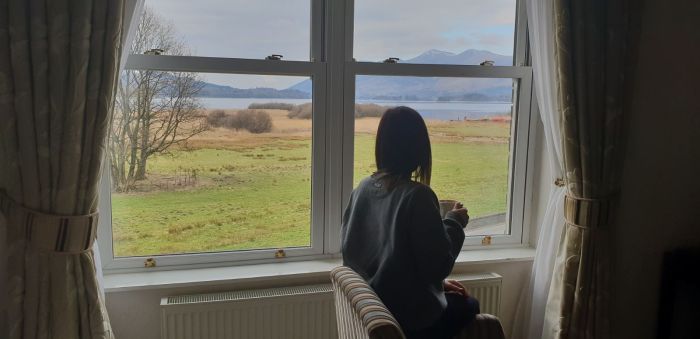
 As I sip my coffee...